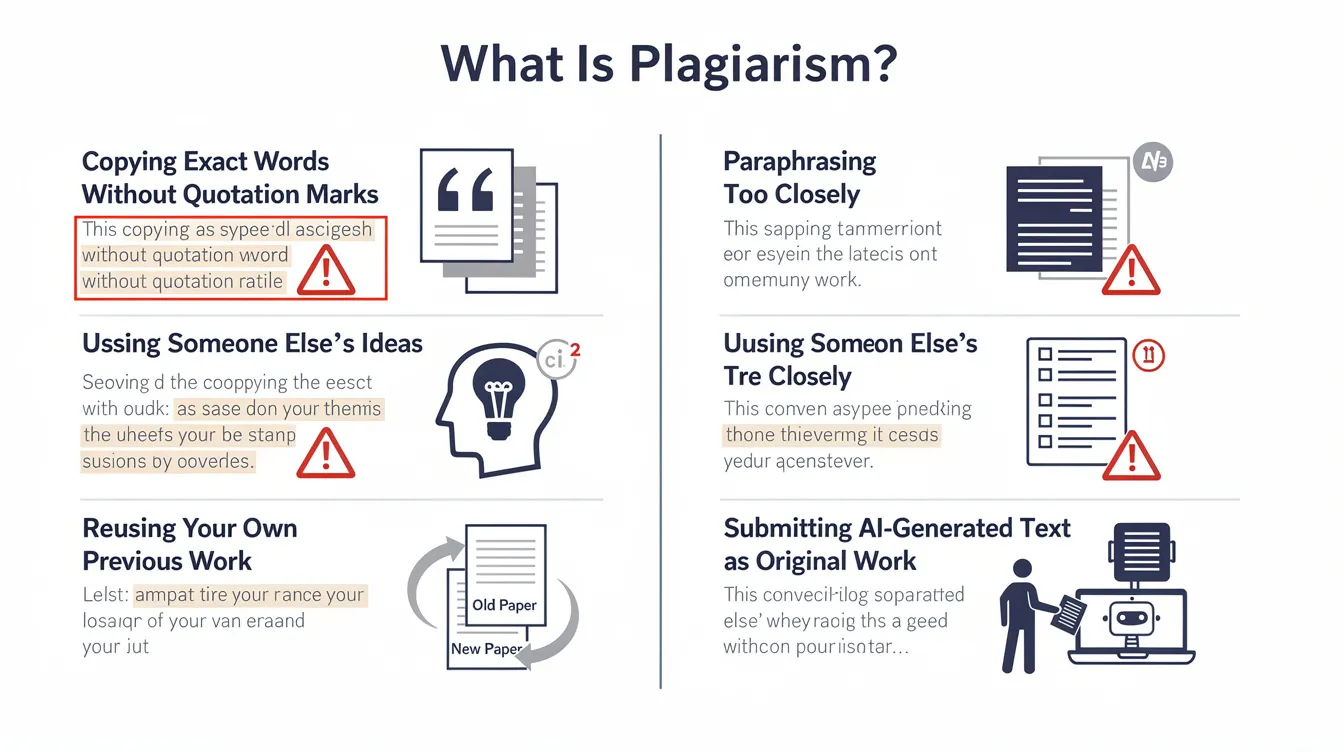
Plagiarism is one of the most serious issues in academic writing because it affects trust, grades, and a student’s reputation. Many people think plagiarism only happens when someone copies a full paper from another source, but that is not true. Plagiarism can happen when a student uses someone else's ideas without giving credit, copies exact words without quotation marks, reuses previous work without permission, or submits ai content as if it were fully original own work. In the academic community, plagiarism is taken seriously because schools expect every student to submit honest written work that reflects real research, effort, and understanding.
Learning how to avoid plagiarism is important for every student, whether you are writing a short assignment, a long essay, a research paper, or an article. Some students commit intentional plagiarism by copying else's work on purpose, while others fall into accidental plagiarism or unintentional plagiarism because they do not understand citation rules. In both situations, the work may still be considered plagiarism. That is why it is important to learn plagiarism best practices early and apply them every time you write.
This guide explains how to avoid plagiarism step by step. You will learn how to work with journal articles, web pages, and online sources, how to use your own words correctly, when to use direct quotations and quotation marks, and how to handle citing sources with proper citation. You will also learn how to avoid self plagiarism and ai plagiarism while protecting your academic integrity, your grades, and your future career.
If you need extra support while planning or improving an assignment, resources like homework help and essay writing help can support the writing process without replacing your own ideas.
What Is Considered Plagiarism?
Before you can avoid plagiarism, you need to understand what is considered plagiarism. Plagiarism happens when a student presents someone else's ideas, words, structure, or material as though it is original. It can happen in many forms. A student may copy lines from an original source, borrow ideas from web pages without citation, paraphrase too closely by changing only a few words, or fail to properly attribute a particular source. All of these can be considered plagiarism.
Plagiarism also includes using direct quotations without quotation marks, borrowing an example from an article without giving credit, and building a whole paper around else's ideas while pretending they are your own ideas. Some students think plagiarism only applies to books or journal articles, but it can also happen with online sources, discussion posts, notes from one class, and content taken from artificial intelligence tools.
In serious such cases, plagiarism can lead to a failing grade, disciplinary action, loss of trust, and other consequences. Repeated problems may bring even more serious consequences depending on school policy. In advanced academic or professional settings, plagiarism may also raise questions about copyright infringement, ethical writing, and credibility in the academic community.
How to Avoid Plagiarism
To avoid plagiarism, you need a process rather than luck. The strongest writing starts with careful research, smart note taking, and a clear plan for how to cite and use sources. Students often run into plagiarism when they rush a paper, mix up source notes with their own ideas, or paste material into a draft without tracking the original source. Once that happens, the lines between their own work and borrowed material become blurred.
A better method is to begin with organized research, write in your own words, use quotation marks when exact wording matters, and add citations as you go. This method reduces accidental plagiarism and helps the student stay in control of the writing. It also makes the final draft stronger because the paper reflects real understanding instead of copied material.
The rest of this guide breaks that process into clear steps so you can use research honestly, cite your sources correctly, and produce written work that shows academic integrity.
Step 1: Start With Strong Research and Note Taking
Good research is the foundation of original writing. Whether you are using journal articles, books, web pages, or other online sources, collect your material carefully. Avoid random copying. Instead, read each article with a clear purpose and record the main point, the original author, and the publication details. This helps create context for your writing and makes later citation easier.
One of the best habits for students is note taking. When taking notes, separate the source material into clear categories. Put direct quotations in one section with quotation marks. Put summaries in another section using your own words. Keep your own ideas in a separate section. This simple form of organization helps prevent accidental plagiarism because you can tell which words came from a source and which ideas came from you.
As you gather research, save the full references immediately. If you wait until the end of the paper, you may lose the original source or forget which material came from which article. That leads to missing citation details and weak references. Taking notes well may feel slow at first, but it saves time later and protects academic integrity.
Step 2: Know When a Source Requires Citation
Many students struggle to decide when to cite. A good rule is this: if the words, ideas, analysis, statistics, or structure came from a particular source, you should cite it. This includes information from journal articles, web pages, lecture material, and most online sources. If you are using an idea from a primary source, you cite that. If you learned it through a secondary source, you usually cite that source unless your instructor asks you to go back to the original source.
Some facts are common knowledge and do not require citation. For example, widely known historical dates or basic scientific facts may count as common knowledge. However, many students label specialized information as common knowledge when it is not. If a point comes from one article, one paper, one study, or one original author, it is safer to properly cite it.
When you are unsure whether something require citation, seek clarification. Your instructor, library staff, or writing center can help. It is much better to seek clarification than to guess and end up with unintentional plagiarism in your written work.
Step 3: Put Ideas Into Your Own Words
One of the most important ways to avoid plagiarism is to learn how to use your own words well. Many students assume that changing a few words is enough. It is not. If you keep the original structure and only replace a few words with unique words, the result may still be considered plagiarism.
Writing in your own words means reading the source, understanding the meaning, stepping away from it, and then explaining the same idea naturally in a fresh way. The sentence form should change. The words should change. The writing should sound like your voice. Even after doing that, you still need citation because the idea did not begin with you. It came from an original source.
Here is a simple example. Suppose an article says that regular reading improves critical thinking by increasing exposure to different arguments and ideas. A weak paraphrase might keep the same structure and change only a few words. A stronger version would restate the point in a genuinely new form and then cite the source. This approach gives credit while still showing your understanding.
Using your own words is not only about avoiding plagiarism. It also helps the student build stronger writing skills, sharper analysis, and more confidence in presenting own ideas.
Step 4: Use Direct Quotations and Quotation Marks Correctly
Sometimes the best choice is to keep the exact words from the original author. This is common when the wording is precise, memorable, or especially powerful. In those moments, direct quotations can strengthen a paper. However, direct quotations must be used carefully.
Whenever you copy exact words from an original source, you need quotation marks and citation. Quotation marks show the reader that the words do not belong to you. The citation shows where those words came from. Without quotation marks, even a short phrase can be considered plagiarism.
Use direct quotations only when they add value. A paper filled with quotes often feels weak because the student is not doing enough original writing. Your essay should mainly be your own work, supported by research. The quotation should serve your point, not replace your thinking.
This is also where many students slip into accidental plagiarism. They may copy a sentence into a draft, plan to add quotation marks later, and forget. That is why it is better to add quotation marks and citations immediately when working with exact wording.
Step 5: Practice Citing Sources Throughout the Paper
Citing sources is one of the clearest ways to avoid plagiarism. It shows where your material came from and gives proper credit to the original author. It also helps the academic community trace the evidence behind your claims. Good citation supports academic integrity because it makes your research transparent.
Do not wait until the end of the paper to add citations. Add citations as soon as you include borrowed ideas, direct quotations, statistics, or summarized material. This makes it easier to properly cite each source and reduces the chance that references will be forgotten. Students who delay citation often lose track of which article supplied which point.
In most forms of academic writing, you will need both in text citations and a full references list at the end. In text citations show the source inside the paragraph. References give the full publication details so readers can find the original source. Whether you use MLA, APA, Chicago, or another style, the principle stays the same: properly attribute borrowed material.
If you are working on a major assignment and need help with structure or source use, it may help to review an assignment help resource while keeping the final analysis in your own ideas and your own words.
Step 6: Understand Self Plagiarism
Self plagiarism is one of the most misunderstood parts of academic writing. Some students think they can reuse previous work freely because they wrote it themselves. In reality, self plagiarism happens when a student submits old material as if it were new without permission, acknowledgment, or proper citation.
For example, a student submits a paper in one class and then reuses the same paper in another one class without approval. Another student may take large sections from previous work and place them in a new essay or article. Even though the words are technically theirs, the new submission may still be considered plagiarism because it does not represent fresh own work for that assignment.
Self plagiarism matters because instructors expect original effort in each paper. Reusing previous work without approval can lead to consequences, including a failing grade or disciplinary action. The safe choice is to ask first. If your instructor allows you to build on earlier research, be honest about it and cite the earlier material when needed.
Because self plagiarism appears so often in student writing, it deserves special attention. Self plagiarism can happen in small ways or large ways. Self plagiarism may involve one paragraph, one section, or a whole essay. The key is transparency. Self plagiarism is avoidable when the student clearly communicates and treats previous work as a source rather than pretending it is entirely new.
Step 7: Watch for Unintentional Plagiarism
Unintentional plagiarism is common, especially when students are still learning how citation works. A student may miss one source, forget quotation marks, confuse their notes, or assume a sentence is different enough when it is not. Even though there is no dishonest intention, the result can still be considered plagiarism.
This is why unintentional plagiarism needs just as much attention as intentional plagiarism. Unintentional plagiarism often happens late in the writing process when the student is tired and rushing to finish the paper. A paragraph may contain else's ideas but no citation. A quote may appear without quotation marks. A fact from web pages may be treated like common knowledge when it actually came from a particular source.
To reduce unintentional plagiarism, review each paragraph before submission. Ask yourself where the idea came from. If it came from research, cite it. If it uses exact wording, add quotation marks. If it looks too close to the original source, rewrite it in your own words and then cite it. This kind of final review can prevent many serious consequences.
Step 8: Avoid AI Plagiarism and Check AI Content Carefully
Artificial intelligence and generative ai have changed the way students approach writing and research. Many use artificial intelligence tools for brainstorming, outlining, or drafting. Such tools can sometimes be a great resource, but they also create new risks. Ai plagiarism happens when ai content is submitted as if it were entirely original own work, especially when the student has not checked the language, sources, or accuracy.
Generative ai systems are trained on a vast database of language patterns and material. That means ai content may produce familiar wording, weak context, false references, or unverified claims. In some such cases, the output may resemble an original source closely enough to create plagiarism concerns. In other such cases, the tool may invent references that do not exist. A student who submits that kind of work without checking it risks both plagiarism and credibility problems.
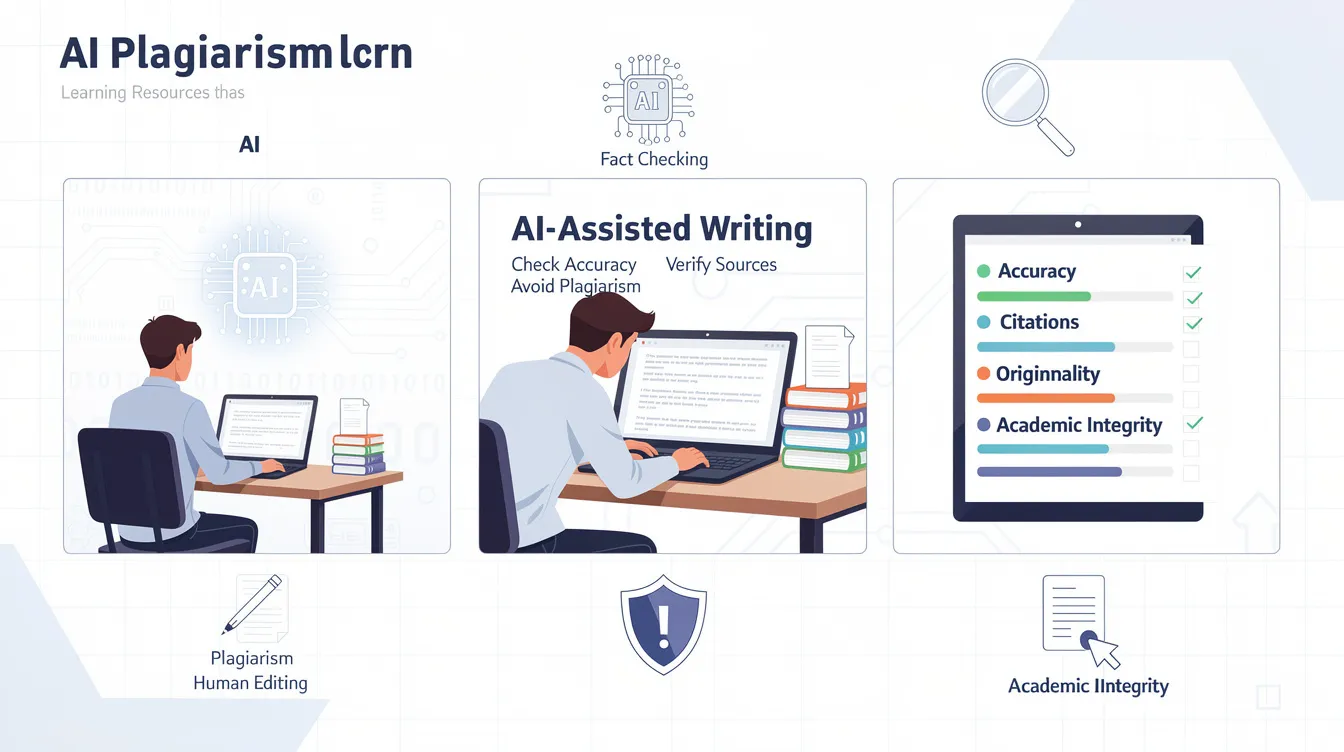
The safest approach is to treat generative ai as support, not as a replacement for thinking. If you use ai content in the early stage of writing, you must review it carefully, fact check every point, and rewrite the material so the final written work reflects your own ideas, your own words, and your real research. You should also follow your school’s rules for artificial intelligence use. If the policy is not clear, seek clarification before you submit.
Ai plagiarism is becoming a bigger issue because students may trust such tools too quickly. Strong writing still depends on human judgment, careful research, and proper citation.
Step 9: Give Credit to Else's Ideas and Else's Work
A major principle of academic integrity is giving credit where it belongs. When you use else's ideas, you need to acknowledge that source. When you build on else's work, you need to properly attribute it. This does not weaken your writing. It strengthens it by showing honesty, research depth, and respect for the academic community.
Giving credit means more than dropping one citation at the end of a paragraph. You need to connect the borrowed point to the source in a clear way. That is why citing sources matters so much. It protects the original author, helps readers follow your research, and shows that your paper is grounded in evidence rather than unsupported claims.
Many students fear that citing sources too often will make their writing seem less original. The opposite is true. A well researched paper uses sources openly and then builds fresh analysis around them. That is how you balance research with own ideas.
Step 10: Double Check Before You Submit
The final step in how to avoid plagiarism is simple but powerful: double check everything. Before a student submits a paper, essay, assignment, or article, it is important to review the full draft with fresh eyes. This final pass can catch accidental plagiarism before it turns into a real problem.
Check whether all direct quotations have quotation marks. Check whether every borrowed point has citation. Check whether the in text citations match the references list. Check whether your paraphrases are actually in your own words rather than too close to the original source. Check whether any previous work has been reused. Check whether any ai content needs to be revised or removed.
You can also use plagiarism checkers or such tools as a support step. These tools can compare your paper against a vast database of online material and flag overlap. However, such tools are not perfect. They cannot always judge context, common knowledge, or whether a passage has been properly attribute to the right source. That is why student judgment still matters. A plagiarism checker is a useful tool, but it is not a substitute for academic integrity.
Why Plagiarism Matters Beyond One Assignment
Some students think plagiarism only matters because of grades. In reality, plagiarism can affect much more. The habits you build in school can shape your future career. Employers, graduate programs, and professional communities value honesty, careful research, and ethical communication. A pattern of plagiarism can damage reputation, reduce trust, and limit opportunities later.
Academic integrity matters because it supports fairness within the academic community. Students who put in the effort to produce original writing deserve a system that values honest work. Professors and institutions care about plagiarism not only because of rules, but because education is meant to develop thought, analysis, and responsibility.
That is why learning how to avoid plagiarism is not just about one assignment. It is about learning how to handle ideas responsibly for the rest of your academic and professional life.
Practical Example of Proper Use of Sources
An example helps show the difference between weak writing and responsible writing. Imagine a journal article argues that group study improves student performance by creating accountability and stronger recall. A weak student draft may copy most of the sentence and swap only a few words. That kind of paraphrase is still too close to the original source and may be considered plagiarism.
A better version would explain the same point using a new sentence form and fresh wording, then add citation. If the exact wording from the article is especially important, the student can use direct quotations with quotation marks and in text citations. This method gives credit, preserves accuracy, and keeps the paper honest.
The lesson from this example is simple. Research belongs in your paper, but it must be handled with care. The final draft should show your understanding, not just borrowed material.
Plagiarism Best Practices for Every Student
Plagiarism best practices are not complicated, but they do require consistency. Start research early so you are not forced to rush. Keep clear notes so source material does not get mixed with your own ideas. Use your own words honestly rather than changing a few words. Use quotation marks for direct quotations. Practice citing sources while writing instead of waiting until the end. Review carefully for accidental plagiarism, self plagiarism, and ai plagiarism.
If something feels unclear, seek clarification. Your instructor, librarian, or writing center can help you understand whether a source require citation, whether a paraphrase is too close, or whether a reused section from previous work creates a problem. The student who asks early is in a much stronger position than the student who guesses late.
Conclusion
Plagiarism can take various forms, but it is avoidable when the student follows a careful process. Start with solid research. Keep organized notes. Understand common knowledge. Use your own words. Handle direct quotations with quotation marks. Practice citing sources with proper citation and accurate references. Review for self plagiarism, unintentional plagiarism, and ai plagiarism before you submit. Most of all, remember that strong writing is not about hiding where ideas came from. It is about using research honestly and building original analysis around it.
When you avoid plagiarism, you protect your grades, your reputation, and your future career. You also show respect for the original author, the academic community, and your own growth as a writer. That is the real value of academic integrity.
If you need support refining a paper, organizing research, or improving clarity while keeping the final work original, AceMyHomework offers academic support designed to help students strengthen their writing process without replacing their own work.