Why do so many students choose a psychology topic that sounds interesting, then get stuck halfway through because it's too broad, too crowded, or too hard to research well? That's the gap most topic lists miss. They give you big themes, but they don't show you how to turn a broad area into a question you can defend in a paper.
Psychology has always been broad, but it wasn't always organized the way students see it now. A key turning point came with Wilhelm Wundt's Principles of Physiological Psychology and the first experimental psychology laboratory at the University of Leipzig, which helped shift psychology from philosophy toward measurable research on sensation, perception, memory, and reaction time, as summarized by Verywell Mind's overview of psychology paper topics. That legacy still matters because strong papers work best when the variables can be observed, surveyed, or tested.
Today, the field is even wider. Current student guides repeatedly highlight social media, sleep, mental health, and academic performance as popular psychology research paper topics because they connect to student life and can be studied through surveys, behavioral outcomes, and standardized scales, as noted by EssayPro's psychology research topics guide. The challenge isn't finding a topic. It's finding the right angle.
A good paper topic is usually narrower than students expect. Broad ideas like social media and mental health often become better papers when you refine them into measurable variables such as self-esteem, loneliness, or addiction, which GradSchools explains in its topic guide. Practicality matters too. Independent student guides stress that you should confirm access to sources, data, or participants before you commit to a design, as discussed by 99papers on choosing psychology research topics.
The list below doesn't just hand you ten themes. It gives you a sharper starting point for each one, a possible thesis direction, and a method that fits the question.
1. Cognitive Behavioral Therapy (CBT) and Mental Health Treatment Outcomes
CBT is one of the safest choices for students who want a clinically important topic with a clear structure. It gives you a built-in framework. Thoughts influence feelings, feelings influence behavior, and treatment targets the patterns linking them.
That makes it ideal for a paper because you can compare disorders, delivery formats, and outcomes without losing focus. You also won't struggle to find scholarly discussion, since CBT appears across research on depression, anxiety, and trauma.
Strong angles inside the topic
A weak paper asks whether CBT works. A stronger paper asks where, for whom, or compared with what.
You could narrow the topic in ways like these:
Population focus: CBT for college students with anxiety symptoms
Comparative focus: CBT compared with psychodynamic therapy for depression
Delivery focus: In-person CBT versus internet-based CBT
Setting focus: School-based CBT for adolescents
A workable thesis might sound like this: CBT remains a strong treatment model because its structured techniques are adaptable across settings, but treatment outcomes may depend on delivery format, client engagement, and symptom type.
Method that fits the question
For most undergraduates, a literature review is the best approach here. You can compare peer-reviewed studies on treatment protocols, common techniques such as thought records and behavioral activation, and differences across populations.
If your class allows a proposal rather than a full empirical study, you could design a survey-based project on student attitudes toward structured therapy. That won't test clinical effectiveness directly, but it can still produce a meaningful discussion about treatment uptake.
Practical rule: Don't try to review all psychotherapy. Pick one disorder, one age group, or one treatment comparison.
Real-world examples help. A paper might discuss Beck Institute treatment models, school-based CBT programs, or internet-delivered CBT as examples of how the same core principles appear in different contexts. If you need help shaping the argument itself, this guide to writing a stellar research paper is useful for moving from topic to thesis.
2. Social Media Impact on Adolescent Mental Health and Self-Esteem
This is one of the most assigned psychology research paper topics for a reason. It's current, visible, and easy to care about. It's also one of the easiest topics to do badly because students often leave it too broad.
The better move is to focus on one psychological outcome. Self-esteem, social comparison, loneliness, body image, and cyberbullying all lead to clearer arguments than a vague claim that social media is “good” or “bad” for teens.
Here's a visual that captures the emotional side of the issue:
Better ways to narrow it
One useful angle is to separate active use from passive use. Posting, messaging, and interacting may affect adolescents differently than endless scrolling and comparison.
Another strong angle is developmental stage. Early adolescence and late adolescence aren't psychologically identical, so the same platform behavior may not have the same effect.
A sample thesis could be: Social media's effect on adolescent mental health is shaped less by total use and more by how teens use platforms, what kinds of comparison they engage in, and whether supportive offline relationships are present.
Students often write stronger papers when they study the mechanism, not just the platform.
Method that fits the question
This topic works well as a review of survey research, longitudinal studies, and school-based interventions. If you're designing your own study, a small questionnaire on social comparison habits and self-esteem would be more manageable than trying to measure “mental health” as a whole.
Use real-life examples carefully. Instagram and TikTok are obvious cases, but your paper should focus on constructs such as appearance comparison, peer validation, or fear of missing out. That keeps the paper psychological instead of drifting into general media commentary.
3. Attachment Theory and Early Childhood Development
Attachment theory gives you a topic with deep historical roots and strong relevance to later life. It connects infant-caregiver relationships with emotional regulation, trust, social behavior, and later relationship patterns.
Students often like this area because it combines theory with vivid real-world examples. It also lets you move from developmental psychology into education, counseling, and family studies without losing coherence.
A sharper research angle
A broad title like “attachment theory” won't carry a full paper. A better version asks how early attachment patterns shape one later outcome.
For example, you might focus on:
Emotional regulation: How secure attachment supports coping under stress
Peer relationships: Early attachment and later social competence
Intergenerational patterns: How caregiver attachment history influences parenting
Intervention: Programs that promote secure attachment in high-risk families
A possible thesis is: Early attachment relationships influence later emotional and social functioning, but later caregiving, school environments, and therapeutic support can change developmental trajectories.
Method and examples
This topic works especially well as a theory-to-evidence paper. Start with secure, anxious, avoidant, or disorganized attachment. Then connect those categories to longitudinal findings, educational implications, or intervention models.
You can strengthen the paper by distinguishing early attachment patterns from adult attachment styles. Students often blur those concepts, and instructors notice. If you need background support while organizing the developmental side of the topic, psychology homework help from Ace My Homework can help you refine terms and structure.
Examples might include Mary Ainsworth's observational work, the Adult Attachment Interview, or caregiver-focused interventions such as Circle of Security. Those examples help readers see that attachment is not just abstract theory. It has practical consequences in homes, schools, and therapy settings.
4. Neuroplasticity and Learning
Neuroplasticity is one of the most interesting psychology research paper topics if you want a paper that feels scientific without becoming unreadable. It sits at the intersection of psychology, neuroscience, education, and rehabilitation.
The core idea is straightforward. The brain changes in response to experience. Learning, injury, practice, and environmental demands all shape neural pathways.
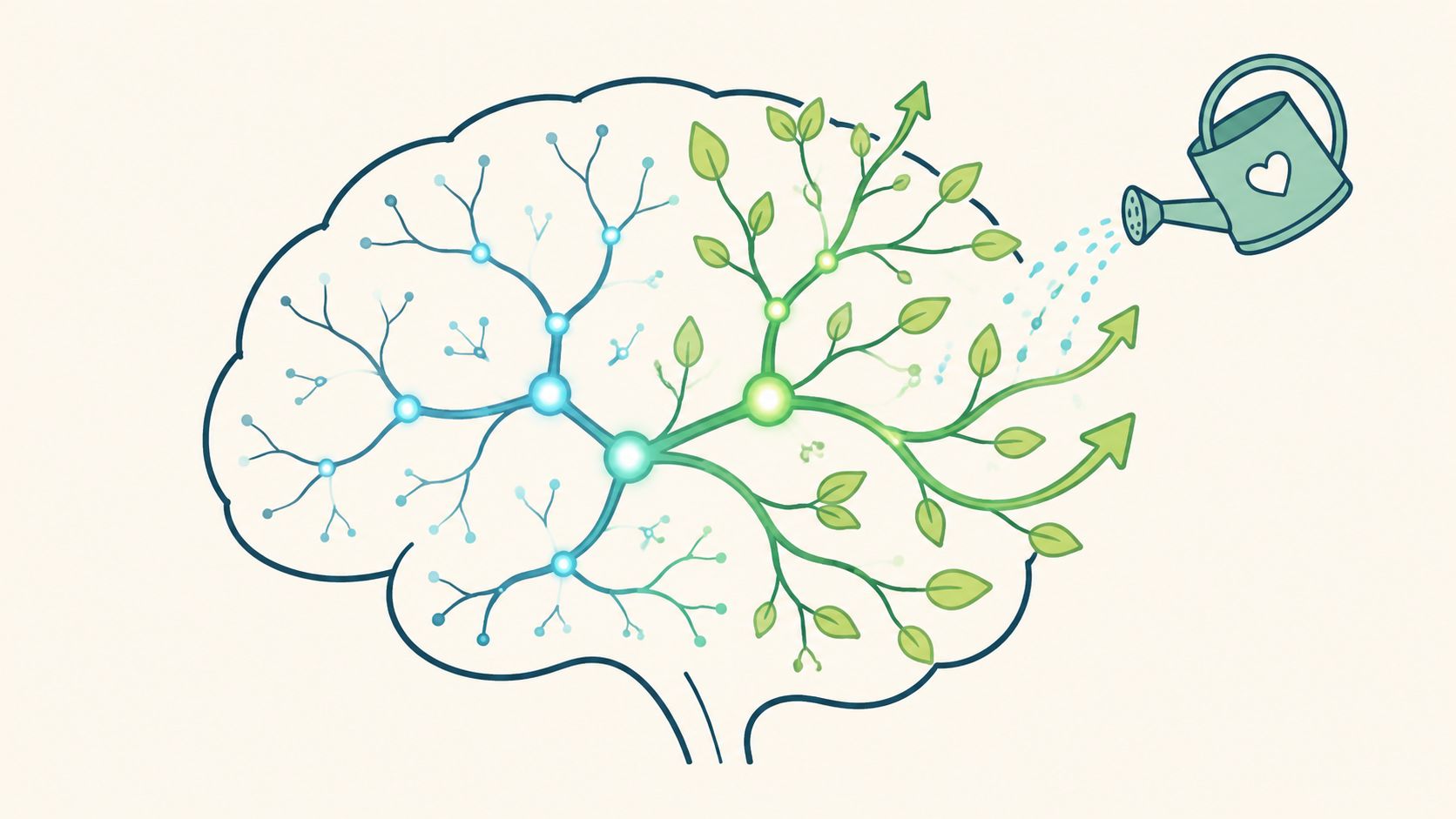
This image can work as a simple conceptual cue for that process:
Research angles that stay manageable
The trick is avoiding pop-neuroscience. “How the brain learns” is too loose. A stronger paper isolates one type of adaptation.
Good options include brain changes during skill acquisition, neuroplasticity after stroke, the role of repetition in learning, or age-related differences in plasticity. You can also examine how educational claims about “brain-based learning” sometimes overstate what the evidence supports.
A strong thesis might be: Neuroplasticity explains why learning and recovery remain possible across the lifespan, but the type, timing, and intensity of experience shape how meaningful those neural changes become.
Method and paper design
This topic usually works best as a concept-driven literature review. Explain key mechanisms such as synaptic change, myelination, and experience-dependent adaptation. Then apply them to one domain like language learning, music training, or rehabilitation.
Best source types: Review articles, neuroimaging studies, and learning research
Best structure: Define neuroplasticity, explain mechanisms, apply to one setting
Best caution: Don't claim every teaching trick “rewires the brain” in a meaningful way
Real-world examples can include musicians, language learners, rehabilitation patients, or adults recovering motor skills after injury. Those examples make the science concrete and stop the paper from sounding like a textbook summary.
5. Emotional Intelligence (EI) and Its Impact on Academic Performance and Career Success
Emotional intelligence is popular because students immediately see its practical value. They know classmates who are bright but poor at handling stress, group work, or feedback. They also know people who manage emotions well and seem to thrive in classrooms and internships.
That tension makes EI a strong applied topic. It lets you ask whether emotional skills matter beyond IQ and whether those skills can be developed.
Where students can make this topic stronger
The best papers don't treat EI as a feel-good buzzword. They define it carefully and distinguish between models. Some researchers treat EI as an ability, while others study it through self-report measures and personality-adjacent traits.
A possible thesis is: Emotional intelligence may support academic and workplace success by improving self-regulation, communication, and stress management, but conclusions depend heavily on how EI is defined and measured.
A paper on EI gets better the moment you compare measurement approaches instead of assuming they all capture the same thing.
Method and useful examples
A comparison paper works especially well here. You could examine ability-based measures such as MSCEIT alongside self-report tools such as TMMS, then connect those approaches to school performance or leadership effectiveness.
You can also focus on interventions. Social-emotional learning in schools, professional training programs, and resilience initiatives in medical education all offer good examples of how EI is applied. For students who want to understand the broader conversation around the topic, these EI books on Most Recommended Books can give useful conceptual background before you move into journal articles.
6. Depression, Anxiety, and Stress
This is one of the broadest areas in modern psychology, which is exactly why students need to narrow it fast. Current topic guides repeatedly point to mental health as a central area of interest because it's relevant, measurable, and closely tied to student life, as discussed in the earlier EssayPro reference.
A paper with all three conditions in equal depth usually becomes shallow. A better approach is to use the trio as a frame, then focus on one relationship. For example, stress as a risk factor for anxiety, or depression and anxiety in college adjustment.
Better paper angles
The most effective papers usually choose one of these paths:
Biopsychosocial analysis: How biology, cognition, and environment interact in one condition
Campus lens: Why student stress can intensify anxiety or depressive symptoms
Treatment comparison: Psychotherapy, medication, or lifestyle-based support
Prevention lens: Early identification and coping support in educational settings
A possible thesis could be: Depression, anxiety, and stress are best understood through a biopsychosocial model because no single cause explains symptom development, severity, or treatment response.
Method and a smarter framing
This area works well for a review paper built around one guiding model. The biopsychosocial framework is especially useful because it keeps the paper organized. Biology covers predisposition and arousal systems. Psychology covers cognition, coping, and learned patterns. Social factors cover relationships, finances, workload, and access to care.
One underserved angle is access and equity in treatment. Recent topic discussions increasingly foreground telehealth, digital mental health, AI, and post-pandemic resilience, with Alliant's clinical psychology research topic guide highlighting technology, telehealth, AI, and resilience as emerging areas. A particularly strong paper doesn't stop at “digital mental health.” It asks who benefits, who gets left out, and how access differs by geography, income, or care availability.
7. Sleep, Circadian Rhythms, and Cognitive Performance in Students
Sleep is one of the easiest topics to make meaningful because students already understand the lived experience. They've pulled all-nighters, forgotten material they studied late, and tried to function in class on too little rest.
That personal connection is helpful, but the paper gets stronger when you connect experience to mechanism. Sleep influences attention, memory consolidation, emotional regulation, and executive function. It also overlaps with scheduling, screen use, and circadian timing.
Here's a visual that suits the topic:
A focused way to write it
A broad title like “sleep and students” is still too wide. Better versions include sleep deprivation and memory retention, circadian misalignment in adolescents, or screen exposure before bedtime and next-day attention.
A workable thesis is: Student cognitive performance depends not only on sleep duration but also on circadian alignment, sleep quality, and habits that interfere with recovery.
Method and structure
This topic fits either a literature review or a simple survey-based proposal. If you run a survey, ask about bedtime consistency, screen use, daytime fatigue, and perceived concentration. If you're writing a review, divide the paper into biological rhythm, cognitive effects, and interventions.
Don't reduce sleep to “more is better.” Timing, consistency, and sleep quality matter too.
Real-world examples might include later school start debates, exam-week sleep disruption, or students who shift their schedules heavily on weekends. Those scenarios give the paper immediate relevance without making unsupported numerical claims.
8. Motivation and Self-Determination Theory
Self-Determination Theory gives students one of the cleanest frameworks in educational psychology. It explains motivation through three needs: autonomy, competence, and relatedness. That makes it easier to organize a paper and avoid vague motivational language.
The topic also has a practical edge. It can explain why some students persist through difficult tasks while others disengage the moment external rewards disappear.
Narrowing intrinsic and extrinsic motivation
A strong paper won't just repeat that intrinsic motivation is “better.” It asks when external rewards help, when they backfire, and how classroom design changes the answer.
Good research angles include autonomy-supportive teaching, the overjustification effect, feedback and competence, or motivation in online learning. A thesis might be: Intrinsic motivation supports deeper engagement and persistence, but well-designed extrinsic structures can still help when they reinforce competence and personal relevance instead of control.
Method and examples that work
This topic fits very well with comparative argument. You can place two classroom approaches side by side. One relies on rewards, deadlines, and compliance. The other builds choice, meaningful challenge, and belonging.
Examples from Montessori classrooms, gamified learning systems, and student feedback practices can all support the discussion. If you want to push the paper further, compare how the same reward can feel controlling in one context and supportive in another. That's where many average papers stop too soon.
9. Prejudice, Discrimination, and Implicit Bias
This topic matters because it connects individual psychology with social systems. Students often begin by focusing only on attitudes, but the stronger paper also addresses behavior, institutions, and context.
There's also plenty of room for precision here. “Bias in society” won't work. But stereotype threat in academic settings, hiring bias, intergroup contact, or diversity training limitations can all become strong papers.
What makes this topic rigorous
The best papers distinguish between explicit prejudice and implicit bias. Those aren't the same thing, and they aren't measured the same way. A careful paper also recognizes that reducing prejudice isn't just about changing thoughts in one person's head.
One useful thesis is: Prejudice and discrimination are sustained by both automatic cognitive associations and institutional structures, so meaningful reduction requires more than awareness training alone.
Method and smart evidence choices
A paper here can compare intervention models. For example, contact-based approaches, bias training, and structural changes in hiring or evaluation systems each rest on different assumptions about how bias works.
You can also center one classic concept such as stereotype threat and trace its implications for testing, belonging, and performance. Real-world examples include classroom participation, resume screening, workplace evaluations, and campus climate initiatives.
A thoughtful paper in this area should avoid moral grandstanding. Define terms carefully, identify mechanisms, and show where psychological research helps explain outcomes without pretending it solves every structural problem by itself.
10. Trauma, PTSD, and Resilience
Trauma research attracts many students because it feels urgent and human. It also requires care. This is not a topic to treat loosely or sensationally. Good papers define trauma-related terms precisely and stay grounded in diagnosis, treatment, and recovery pathways.
PTSD is often the starting point, but resilience can be just as interesting. Why do some people develop severe ongoing symptoms after trauma while others recover more effectively with support, meaning-making, or treatment?
Productive angles for a paper
This topic becomes strongest when you focus on one recovery question. You might compare trauma-focused CBT and EMDR, study social support as a resilience factor, or analyze developmental trauma in childhood versus single-incident trauma in adulthood.
A possible thesis is: Recovery from trauma depends on more than symptom reduction because effective healing often includes safety, relational support, and the rebuilding of meaning as well as evidence-based treatment.
Method and real-world relevance
This area fits a clinical literature review very well. Use DSM-based definitions carefully, then compare models of treatment and resilience. Distinguish PTSD from broader trauma responses so your paper doesn't flatten everything into one diagnosis.
Clinical focus: Compare TF-CBT, EMDR, and supportive interventions
Population focus: Veterans, first responders, refugees, or survivors of childhood trauma
Conceptual focus: Fear conditioning, memory, hypervigilance, and recovery
If you want a narrower applied angle, you might examine anxiety disorders and PTSD together in clinical education contexts. This Ace My Homework resource on anxiety disorders, PTSD, and OCD can help with terminology and differentiation while you shape the paper.
Good trauma papers stay precise. They don't turn every difficult experience into PTSD, and they don't reduce resilience to simple positivity.
Comparative Overview of 10 Psychology Research Topics
Topic
Implementation complexity
Resource requirements
Expected outcomes
Ideal use cases
Key advantages
Cognitive Behavioral Therapy (CBT) and Mental Health Treatment Outcomes
Clinical treatment for survivors, veterans, first responders, refugees
Established evidence‑based treatments; integrated biopsychosocial focus
From Topic to A-Grade Paper: Your Next Steps
Choosing from these psychology research paper topics gives you a starting point, not a finished paper. What separates a strong paper from an average one is usually not the topic itself. It's the quality of the question. A broad topic invites summary. A focused topic invites argument, evidence, and analysis.
Start by narrowing your subject until you can express it in one sentence without using vague words like “effects,” “issues,” or “importance” by themselves. If your topic is social media and mental health, refine it to passive Instagram use and self-esteem in adolescent girls, or cyberbullying and loneliness in first-year students. If your topic is trauma, narrow it to resilience factors in first responders or the comparison between EMDR and trauma-focused CBT. A paper becomes easier to write the moment the topic becomes harder to misunderstand.
The next step is building a real thesis. A thesis isn't just a topic in sentence form. It should make a claim someone could question. “Sleep affects students” is not a thesis. “Student cognitive performance is shaped not only by sleep quantity but by circadian alignment and bedtime consistency” is much stronger because it gives you something to argue and support.
Once you have that claim, gather evidence from peer-reviewed journal articles, academic books, and reputable psychology organizations. Use sources that match the job you need them to do. A classic theory source can define your framework. A recent empirical article can show how the theory holds up in a current setting. A review article can help you synthesize patterns rather than summarize one study at a time. If you're proposing your own study, make sure your methods are realistic. That practical point matters. Student research guides repeatedly emphasize that a topic should be supported by available sources and realistic participant or data access, not just personal interest.
Another move that improves papers quickly is choosing a method that fits the question. A literature review works well when you want to compare treatment approaches, theoretical models, or findings across populations. A survey proposal makes more sense when you want to examine attitudes, habits, or self-reported experiences in a student group. A content analysis might work for media-related topics. The method should feel natural, not forced.
Originality matters, but students often misunderstand what originality looks like. You usually don't need an obscure disorder or a highly unusual theory to write a strong paper. In fact, one of the most useful contrarian lessons in topic selection is that the best questions often sit inside crowded areas rather than outside them. Dovetail's guide to good psychology research topics points toward gaps, debates, emerging trends, and subgroup differences, and that's often where a paper becomes compelling. A paper on anxiety is common. A paper on how anxiety treatment access differs by geography or income within a digital-care model is much more specific and often more original.
As you draft, keep the structure disciplined. Your introduction should define the problem and present the thesis. Your body paragraphs should each do one clear job, such as defining a concept, presenting evidence, comparing interpretations, or addressing limitations. Your conclusion should not merely repeat the introduction. It should show what your evidence adds up to and why the question matters.
If writing is the hardest part, outside support can make a real difference. Students often know what they want to say but struggle to organize it into a coherent, polished argument. In that situation, services such as Ace My Homework can help you refine a topic, strengthen a thesis, and shape a paper that is logical, original, and readable. If you're polishing a draft and want it to sound more natural while keeping an academic tone, the HumanizeAIText academic humanizer can also help smooth awkward phrasing.
A good psychology paper usually begins with one decision made well. Pick a topic that's narrow enough to research, meaningful enough to sustain your interest, and clear enough to turn into an argument. Once you do that, the blank page stops being a problem.
If you need help moving from a rough idea to a finished draft, Ace My Homework can connect you with psychology tutors and academic writers who help with topic refinement, outlining, research support, and polished papers that fit your course requirements.
Need Help With Research Papers & Dissertations?
Post your assignment, compare tutor bids and work with an expert who explains each step.
Get affordable and top-notch help for your essays and homework services from our expert tutors. Ace
your homework, boost your grades, and shine in online classes—all with just a click away!
Explore our curated list of compelling child psychology research paper topics. Get ideas, research questions, and tips to start your next academic project.
Find the best psychology research paper topics for your next assignment. Explore 10 ideas with thesis angles, methods, and tips for writing a great paper.
. Economics focuses on studying scarcity and its effects on the use of resources, growth of production, and welfare over time. These ideas tackle the topic from different angles and could be explored when writing research papers.