Mathematics is full of difficult questions, but some problems stand above the rest because they have resisted solution for decades or even centuries. These are not ordinary classroom exercises. They are deep questions that shape entire fields of research and challenge the smartest mathematicians in the world. Some of them are so important that the Clay Mathematics Institute named them Millennium Prize Problems and offered a one million dollar prize for a correct solution. Today, six of those Millennium Problems remain unsolved, while the Poincaré Conjecture has already been solved.
Looking at the hardest math problems in the world helps us understand how far mathematics reaches beyond school formulas and standard equations. These problems are not only difficult because they are technical. They are difficult because they connect to some of the deepest patterns in numbers, geometry, logic, physics, and computation. In many cases, solving one of them would change how mathematicians understand an entire branch of knowledge.
In this guide, we will look at some of the most famous hard math problems, explain them in simple terms, and show why they continue to matter. We will begin with the current unsolved Millennium Prize Problems, then briefly mention a few other famous unsolved questions that often appear in discussions about the hardest problems in mathematics.
Riemann Hypothesis
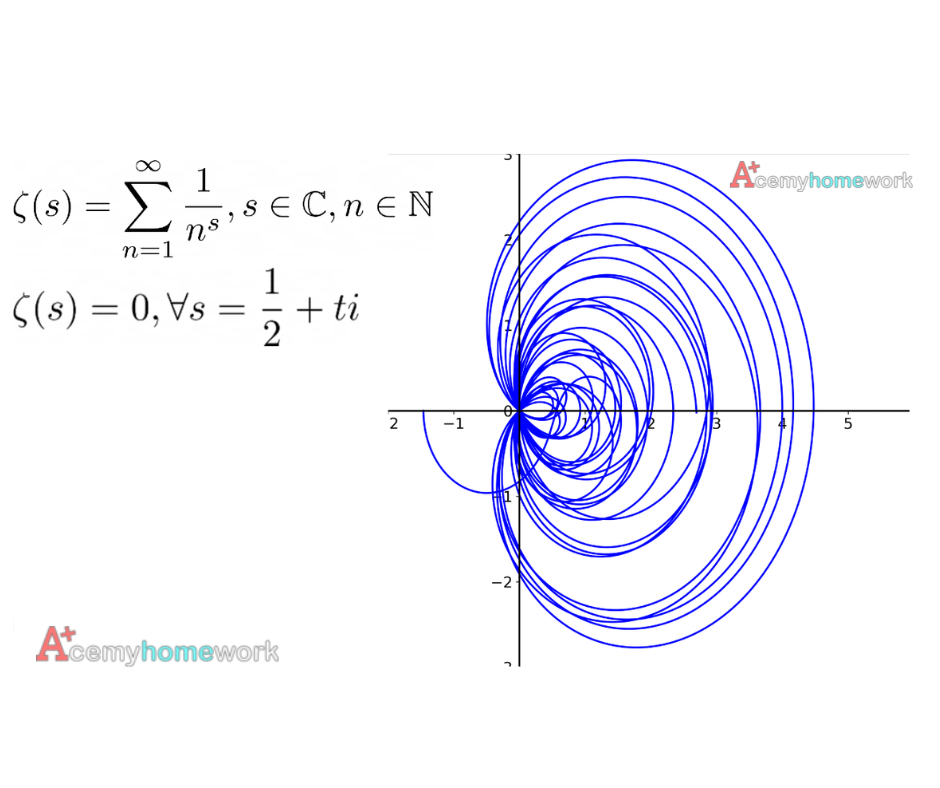
The Riemann Hypothesis is one of the most famous unsolved problems in mathematics. It was proposed by Bernhard Riemann in 1859 and is closely tied to the distribution of prime numbers. Prime numbers may appear irregular at first glance, but mathematicians have discovered that they follow deep hidden patterns. The Riemann Hypothesis is believed to describe one of the most important of those patterns.
At the center of the problem is the Riemann zeta function, a function studied in complex analysis and number theory. The hypothesis says that all of its non-trivial zeros lie on a specific line in the complex plane, namely the line with real part one-half. This may sound abstract, but the reason it matters is simple: if the hypothesis is true, it would sharpen our understanding of how prime numbers are distributed among the integers. That would affect many results in number theory and related areas.
The Riemann Hypothesis remains open because no one has yet been able to prove that all those zeros lie exactly where expected. It is one of those problems that looks concise when stated, but becomes extremely difficult when approached formally. That contrast is one reason it is often called one of the hardest math problems ever posed.
P versus NP problem
The P versus NP problem sits at the border of mathematics and computer science. It asks whether every problem whose solution can be checked quickly can also be solved quickly. The Clay Mathematics Institute includes it among the Millennium Problems because of how central it is to computation, optimization, and modern theoretical computer science.
In simple terms, class P contains problems that can be solved efficiently by an algorithm. Class NP contains problems for which, if someone gives you a proposed answer, you can verify it efficiently. The big question is whether those two classes are actually the same. If P = NP, then many problems that seem computationally hard today might become much easier in principle. If P ≠ NP, then there is a real gap between checking an answer and finding one.
This problem matters far beyond theory. It has implications for cryptography, scheduling, route planning, data analysis, and many forms of optimization. Most experts believe that P is not equal to NP, but belief is not proof. Until a proof appears, the question remains one of the greatest open problems in mathematics and computer science.
Navier-Stokes Equation
The Navier–Stokes equations describe how fluids move. They are used to model water, air, blood flow, ocean currents, and many other real-world systems. These equations are fundamental in fluid dynamics, yet mathematicians still do not fully understand whether their solutions always behave nicely in three dimensions. That is why the Clay Mathematics Institute lists the Navier–Stokes existence and smoothness problem as one of the Millennium Problems.
This equation describes how the velocity field evolves. It includes the effects of pressure gradient (∇p), viscous forces (v ∇2 u), The issue is not that the equations are unknown. The issue is whether, starting from reasonable initial conditions, smooth solutions always exist for all time, or whether singularities can appear. A singularity would mean the solution breaks down in a way that prevents the model from remaining smooth and well behaved.
This problem matters because fluid flow appears everywhere in science and engineering. Better mathematical understanding of these equations would deepen knowledge of turbulence, one of the most difficult subjects in applied mathematics and physics. It is a perfect example of a problem that is both theoretically deep and practically important.
Yang-Mills theory
Yang–Mills theory is a core part of modern particle physics. It helps describe fundamental forces, especially within the framework of quantum field theory. The Millennium Problem connected to it asks mathematicians to show that Yang–Mills theory exists in a mathematically rigorous way and that it has a positive mass gap.
The phrase mass gap refers to the idea that the lightest particle predicted by the theory should have a strictly positive mass, even though the equations themselves begin in a form that might suggest otherwise. Physicists strongly believe this is true because it matches observed reality, but turning that belief into a full mathematical proof has proved extremely difficult.
This problem matters because it sits at the meeting point of mathematics and physics. A rigorous solution would strengthen the mathematical foundations of one of the most successful physical theories ever developed. It would also help explain how abstract symmetry principles produce real measurable effects in nature.
Hodge Conjecture
The Hodge Conjecture comes from algebraic geometry, a field that studies geometric shapes defined by polynomial equations. It asks whether certain kinds of cohomology classes can be represented by algebraic cycles on smooth projective varieties. The Clay Mathematics Institute includes it as one of the Millennium Problems because it reaches into the deep structure of geometry itself.
That formal statement can sound intimidating, but the basic idea is that mathematicians want to know when a geometric feature detected through topology or analysis actually comes from an algebraic object. The Hodge Conjecture suggests a bridge between two ways of understanding shape: one more geometric and one more algebraic.
It remains unsolved because that bridge is not fully understood in general. Some special cases are known, but the complete statement has resisted proof. This problem is difficult not because the question is badly formed, but because it lives at the center of several highly developed branches of mathematics at once.
Birch and Swinnerton-Dyer Conjecture
The Birch and Swinnerton-Dyer Conjecture is one of the great unsolved problems in number theory. It studies elliptic curves, which are algebraic curves with rich arithmetic structure. These curves are important not only in pure mathematics but also in areas such as cryptography. The Clay Mathematics Institute lists this conjecture as one of the Millennium Problems.
The conjecture links two things: the number of rational points on an elliptic curve and the behavior of its associated L-function near a special point. In rough terms, it predicts that the analytic behavior of the L-function reflects the algebraic complexity of the curve. This is a powerful idea because it connects two different mathematical worlds in a precise way.
Mathematicians have proved important partial results, but the full conjecture remains open. A complete solution would mark a major breakthrough in arithmetic geometry and would deepen understanding of rational solutions to polynomial equations.
A Problem Often Mentioned but Already Solved: Poincaré Conjecture
Many lists of the hardest math problems still mention the Poincaré Conjecture, and that is understandable because it was one of the original Millennium Problems. However, it should not be listed among the current unsolved Millennium Problems because it has already been solved. The Clay Mathematics Institute explains that Perelman’s proof resolved the conjecture as part of the geometrization program.
The conjecture asked whether every simply connected, closed three-dimensional manifold is homeomorphic to the three-dimensional sphere. It was one of the most famous questions in topology for many years. Its solution remains one of the major achievements in modern mathematics, but it is no longer an open problem.
That distinction matters in a blog post like this one. If an article calls itself a guide to the hardest unsolved math problems, it should not present the Poincaré Conjecture as still open.
Other Famous Hard Unsolved Math Problems
Not every difficult open problem belongs to the Millennium list. There are many other famous unsolved questions that continue to attract attention.
One is the Twin Prime Conjecture, which says there are infinitely many prime pairs that differ by two, such as 11 and 13 or 17 and 19. The conjecture remains open, although progress has been made on related bounded gaps between primes.science.
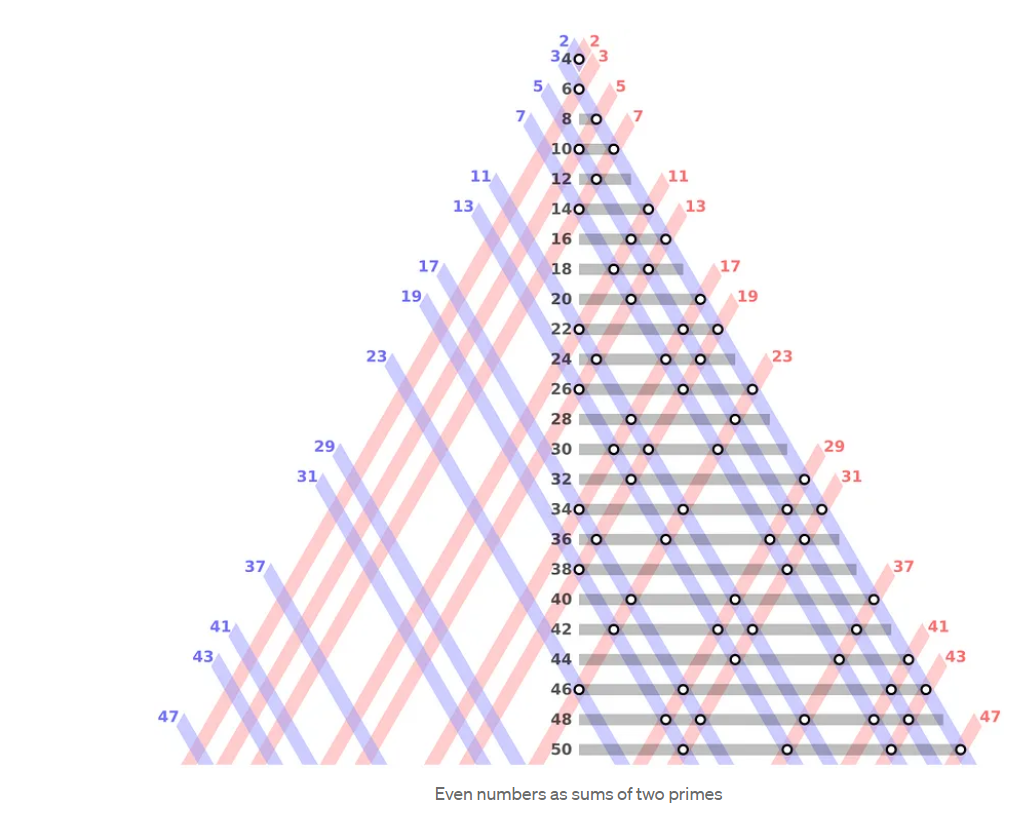
Another is the Goldbach Conjecture, which states that every even integer greater than 2 can be written as the sum of two prime numbers. It is one of the oldest unsolved problems in number theory and has been checked for very large ranges, but it still lacks a complete proof.
These examples show that the world of hard math problems extends well beyond the Millennium list. Some are famous because of prize money, while others are famous because they have stood firm for generations despite enormous effort.
Why These Hardest Math Problems Matter
It is easy to think of these problems as distant puzzles that matter only to researchers, but that would be too narrow. Hard math problems matter because they push the development of new ideas, methods, and tools. Even when a problem remains unsolved, the work done around it often transforms mathematics in useful ways.
These questions also reveal something important about the nature of knowledge. A simple sentence can hide enormous depth. A problem may be easy to state, yet extremely hard to solve. That gap between statement and proof is one of the reasons mathematics remains so powerful and fascinating.
For students, these problems can also be encouraging in a strange way. They remind us that struggle is normal in mathematics. Even the best mathematicians in the world spend years working through uncertainty, dead ends, and partial progress. Difficulty does not always mean failure. Sometimes it means you are looking at a question that truly matters.
Conclusion
The hardest math problems in the world continue to challenge human understanding because they sit at the edge of what mathematics can currently explain. From prime numbers and elliptic curves to fluid motion and computational complexity, these open questions shape the future of mathematical research. They are not just famous because they are difficult. They are famous because solving them would change what we know about numbers, structure, logic, and the physical world.
While the world’s hardest math problems remain open to top researchers, many students face their own difficult math challenges every day in classwork, homework, and exams. Breaking down complex ideas into clear steps is often what makes the difference between confusion and real progress. If you are juggling multiple deadlines and need extra academic support, Ace My Homework offers math homework help for students who need clear explanations, guided problem solving, and support with difficult assignments.
Need Help With Math?
Post your assignment, compare tutor bids and work with an expert who explains each step.
Get affordable and top-notch help for your essays and homework services from our expert tutors. Ace
your homework, boost your grades, and shine in online classes—all with just a click away!
Math homework tips that work: a step-by-step method, ways to check your math answers, a weekly time budget and how to finish faster without cutting corners.
Uncover what are the hardest colleges to get into. Our list reveals the top 10 schools, their acceptance rates, and tips to boost your application profile.