When it comes to research, making sure the findings are trustworthy is super important. There are two big concepts that help with that: external validity and internal validity. Both are really crucial for checking how good the research is, but they focus on different things. External validity is all about how well the results can be applied to other situations or groups of people. It helps us see if the findings are relevant beyond just the specific study.
On the other hand, internal validity is about making sure the study itself is done right and that the results are really caused by the things the researchers are looking at. It's like checking if the study was done in a way that gives accurate results. We will look at the differences between external and internal validity and see how they both play important roles in making sure research is solid and dependable.
If you ever need some extra help understanding all this, our tutors are here for you. They will guide you on your research journey and help you out whenever you need it. So don't hesitate to reach out to us.
Defining External Validity
External validity is all about how well the results of a study can be applied to other situations or groups of people. It helps researchers figure out if their findings can be useful beyond just the specific study they did.
For example, let's say there's a medical study testing a new drug. To make sure the results are applicable to a lot of patients, the researchers need to include a diverse group of participants that represents the patients they want to help. This way, they can increase the chances that the drug will work for more people.
To achieve high external validity, researchers have to think about things like who they include in the study, where they do the research, and how they collect data. It's all about making sure the findings can be useful in the real world and help inform decisions and policies.
So, external validity is like checking if the study's conclusions have a big impact and can be used beyond just the specific group of people they studied. It's important to think about this when doing research to make sure the results are really valuable and relevant to a wider audience.
Threats to External Validity
External validity is all about how well the results of a study can be applied to other situations or groups of people. But sometimes, there are things that can make the findings less useful or applicable.
One thing that can mess up external validity is selection bias. That happens when the people in the study don't really represent the bigger group of people the researchers want to learn about. So, the results might not be accurate for the whole population. Another issue is the Hawthorne effect. That's when people in a study change their behavior just because they know they're being observed. It can make the results look different from what would happen in the real world.
Sometimes, the relationship between different things being studied can change in different situations. That's called interaction effects. When that happens, the findings might not work the same way for everyone. Also, if people in the study already know about the things being tested, it can affect how they respond. That's called the testing effect and can lead to biased results.
To make sure the findings are useful in real life, researchers have to design the study carefully, use random sampling, and do the research in real-world settings. It's also important for them to be honest about any limitations the study might have and think about how the results could apply to other situations or groups of people. That way, they can make sure the findings are relevant and can help beyond just the specific study they did.
What is Internal Validity
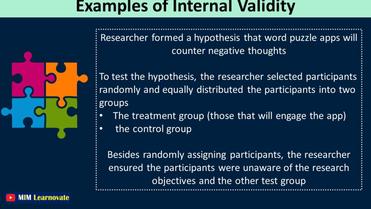
When we talk about internal validity in research, we're looking at how well the study shows a cause-and-effect relationship between different things. To make sure the results are accurate, researchers have to be careful about some important stuff.
One big thing is controlling for confounding variables. These are other factors that could mess up the results and make it hard to figure out what's really causing the effects. So, researchers have to try their best to minimize any biases and make sure the study is well-designed.
If a study has high internal validity, it means we can be pretty sure that the changes observed are actually caused by the things the researchers were looking at. It's not just random chance or some other stuff messing with the results. There are different things that can affect internal validity, like how the study was set up, how well researchers controlled other factors, and how reliable their measurements were.
To make sure their conclusions are strong, researchers use tough experimental designs, control groups, random assignment of participants, blinding procedures (where people involved don't know the details of the study), and reliable measurement tools.
For example, let's say some researchers want to see if a new way of teaching helps students do better in school. To make sure the study has high internal validity, they have to carefully control for things like how much the students knew before the new teaching method, their family backgrounds, and how experienced their teachers were.
By doing this, they can confidently say that any improvements in student performance are really because of the new teaching method they were testing. This makes their study's internal validity stronger and helps us trust their findings.
The Trade-Off: External vs. Internal Validity

In research, there's this tricky balance between two types of validity: internal and external validity. Each one has its own strengths, but focusing too much on one can cause problems with the other.
Imagine doing a super-controlled experiment in a lab. It's great for getting solid cause-and-effect relationships, so that's high internal validity. But the downside is that it might not exactly match real-life situations, so the external validity is lower. On the other hand, if you do a study out in the real world, like in a natural setting, you've got high external validity. It means your findings could apply to real-life situations. But, it might be harder to control all the other factors, so the internal validity could be lower.
So, researchers have to find the right balance between these two types of validity. They have to think about what's most important for their research goals and what trade-offs they're willing to make. If they want strong cause-and-effect relationships, they might focus on internal validity and do controlled lab experiments. But, if they want findings that apply to real-life situations, they might prioritize external validity and do field studies.
Striking this balance is super important because it ensures that the research is solid and can be applied to the real world. It means we can trust the findings and know they're credible and useful in practical situations.
Strategies to Improve External Validity
Let's talk about ways to make research more reliable and applicable in the real world! Researchers can use different strategies to improve external validity, which means making sure their findings can be useful in a wide range of situations.
One way is by doing experiments in real-life settings instead of just in a lab. This helps to see if the results hold true outside of controlled conditions. They can also use random sampling, which means picking participants in a way that represents a bigger group of people. This way, the findings can apply to more diverse groups.
Another cool thing researchers can do is use qualitative research methods. This means they talk to people and really understand their thoughts and experiences. This gives a deeper insight into the topic and makes the study's findings more valuable and applicable to real-life situations.
Imagine a study looking at how a program helps a community. To improve external validity, the researchers might try the program in different communities with various backgrounds. This way, they can see if it works for different kinds of places and people.
Strategies to Improve Internal Validity
To make research more reliable, scientists use some cool techniques to improve internal validity. This means making sure their study really shows cause-and-effect relationships.
One way is by setting up experiments carefully. They use control groups, where some participants don't get the treatment being tested, and random assignment, where participants are put into groups randomly. This helps make sure any differences in the results are because of the treatment and not other factors.
Researchers can also use cool statistical analyses to spot and deal with potential issues that could mess up the results. By doing this, they can make sure their study's conclusions are solid and trustworthy. For example, let's say they're studying how sleep affects brain performance. To improve internal validity, they might randomly assign people to different sleep conditions, so other factors like age or gender don't affect the results.
Balancing External and Internal Validity
Finding the right balance between external validity and internal validity is super important in research. Researchers need to think about what they want to achieve and how much control they need.
If they focus more on external validity, they might let go of some control over outside factors to make their study more like real life. But if they prioritize internal validity, they'll use strict control in their research to show strong cause-and-effect relationships.
For example, let's say they're studying a new teaching program for students in a certain school district. If they want the results to help other similar districts, they will really care about external validity. But if they want to figure out what specific teaching methods work best, they'll put more emphasis on internal validity to show clear cause-and-effect connections.
Unlock more Lessons With Expert Essay Writing Services
if you are a student aiming for academic success, it's important to know about external validity and internal validity in research. These two are like the backbone of a good study, and they help researchers draw solid conclusions.
Just like how you need a support system to do well in your studies, our team at Acemyhomework is here to support you! Our tutors and experts are like the research pros, dedicated to helping you overcome academic challenges. Whether you're struggling with tough subjects or want to boost your grades, we've got your back. Our services are all about giving you the personalized help you need.
So, just like researchers want reliable results, we're here to empower you with reliable knowledge and assistance. Don't let anything hold you back from excelling in your studies! Let's take that first step together towards academic excellence. Chat with us now!
Frequently Asked Questions
What is the main difference between external and internal validity?
External validity refers to the generalizability of research findings beyond the study's specific sample and context, while internal validity focuses on establishing credible cause-and-effect relationships within the study.
How can researchers enhance external validity?
Researchers can enhance external validity by using diverse and representative samples, conducting studies in real-world settings, and replicating the research across different populations.
How can researchers enhance internal validity?
Researchers can enhance internal validity by using rigorous experimental designs, employing control groups and random assignment, and minimizing the influence of confounding variables.
Can a study have high external validity but low internal validity, or vice versa?
Yes, a study can have high external validity but low internal validity, or vice versa. Researchers need to balance these two types of validity based on their research goals and priorities.
Why is it important for researchers to consider both external and internal validity in their studies?
Considering both external and internal validity ensures that research findings are both relevant to the real world and credible in establishing cause-and-effect relationships. By striking the right balance, researchers can draw meaningful and impactful conclusions from their studies.