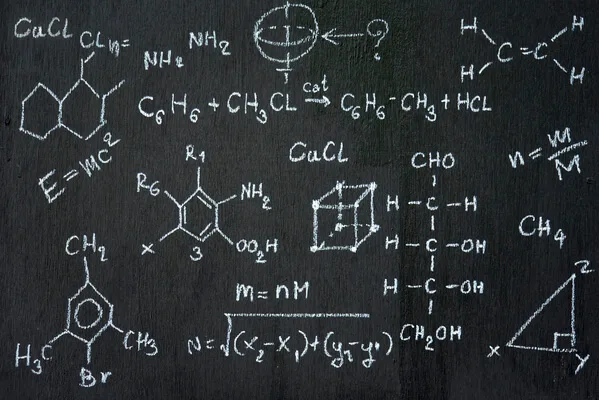
The University enrols hundreds, if not thousands of members in different chemistry subjects in graduate, undergraduate, postgraduate, and academic programs. This is a comprehensive article that walks you through various branches of chemistry. Several other international universities and colleges offer chemistry diplomas at a higher level.
Need help with your chemistry homework? We have the best professionals to complete the assignment before the deadline.
What Is Chemistry – The Definition?
Chemistry refers to the science of atomic matter composed of chemical elements. It includes chemical reactions, properties, structures, behaviour, composition, and the changes resulting from chemical reactions.
Chemistry is focally concerned with atoms, their reactions with atoms, and the chemical bonds' properties.
Summary of Chemistry
Chemistry is described as the following:
Chemistry is a widely recognized category of specialized science expertise that typically embodies its nomenclature and terminology. Chemistry is represented by one or more scientific journals where peer review research has been published.
Chemistry is a natural science that seeks to elucidate the rules that govern the natural world using scientific and empirical methods.
- It is an academic discipline.
Chemistry is one of the academic departments, national and international societies, curricula, and degrees.
- It is a physical science that studies nonliving systems
- It's a biological science that studies the role of chemical and chemical processes in a living organism
Examples of Chemistry in Our Everyday Life
Common salt
Cooking any food requires salt. Salt is scientifically known as sodium chloride and helps add food flavor, and acts as a preservative.
Food digestion
Right from chewing food to digestion, many chemical reactions occur. Once food reaches the stomach, it is mixed with hydrochloric acid released into the stomach for digestion.
Floating ice
Suppose you pour ice into a glass of water or soda, the ice floats. This is because the density of water is heavier than ice.
Sunscreen
Sunscreen is an essential element in cosmetics that protects us from harmful UV rays and preserves our natural complexion. Various components in sunscreen, such as sunscreen TiO2 block sunrays and prevent the rays from penetrating the deep layers of skin.
Medicine
Different medicines are used to treat various types of diseases. This is because each disease requires a different kind of chemical reaction to have the patient cured.
Food preservatives
Various chemicals are used to help preserve and assist restrain bacteria and viruses. The commonly used chemicals include sorbic acid, benzoate, sorbate, etc.
Career Prospects in Chemistry
The diversity of chemistry and its evolving interspecific specializations offer many career opportunities. A degree in chemistry opens doors to a wide variety of career opportunities. The range of available jobs is considerable and covers many different types of chemistry and industries such as nanotechnology, large-scale chemical plants, the drinks and pharmaceutical industries, or teaching.
Your skills and knowledge will also be in demand in other areas. A chemistry study helps you develop logical thought, critical thinking, and numerical skills and write accurate and concise reports. As a result, our chemists demand national and local government, hospitals, and education at all levels.
Career opportunities include, but are not limited to:
- Lecturer
- Environmental Chemist
- Forensic Researcher
- Forensic Scientist
- Analytical Chemist
- Accountant/ Auditor
- Chemical Engineer
- Chemical Development Engineer
- Patent Agent
- Purification Scientist
- Toxicologist
Are you planning to take your career to the next level? Study with our tutors today.
Branches of Chemistry with Real-Life Examples
Chemical sciences include studies on how different materials change colours form, size, and shape depending on interactions with other materials. Chemistry can impact everyday life and all food products or foods that are consumed, cosmetic, e.g., cosmetic medications. It will help you make decisions regarding watering vegetation during the seasonal period in your house, setting the baking sheet's temperature, choosing the correct treatment to cure acidity, and using certain sunscreens.
Different Types of Chemistry
This category focuses on environmental chemical sciences and is divided into five specialized domains, including organic chemistry & analysis; and chemical & organic engineering. The organic understanding composition makes it essential to learn biochemistry and molecular biology when you think about these biological products like DNA and RNA. Inorganic compounds and other compounds are found in many studies as inorganic compounds but have no carbon.
Organic Chemistry
Organic Chemistry is the highest essential area of chemistry that investigates molecules containing carbon-helix bonding hydrocarbons. Originally named science, it primarily deals in structural characteristics and reactions. The Organic Chemistry study helps students recognize and distinguish the most commonly occurring compounds to develop the corresponding features and functions. Graduates are allowed to enter multiple industry sectors in the chemical coating, chemistry, fuel oil, etc. The pharmaceutical industry offers diverse jobs.
Organic chemistry involves the study of the structure, properties, and preparation of chemical compounds that consist primarily of carbon and hydrogen.
Organic chemistry overlaps with many areas, including
It is the design, development, and synthesis of therapeutic drugs. It overlaps with pharmacology (the study of drug action).
This is the study of chemical compounds containing bonds between carbon and a metal.
This is the study of the chemistry of polymers.
- Physical organic chemistry
This is the study of interrelationships between structure and reactivity in organic molecules.
This is the study of the spatial arrangements of atoms in molecules and their effects on the chemical and physical properties of substances.
Physical Chemistry
Physical Chemistry describes compounds' physical property and properties through law involving numerous concepts, including quantum chemistry and thermodynamic mechanics. One of the simplest chemistry subjects allows students to grasp the physical properties of the components, which include thermodynamic resistance, heat, and density. Subjects of research are explored in various mathematical models incorporating many methods.
Physics chemistry study of the effect of chemical structure on the physical properties of a substance.
Physical chemists typically study the rate of a chemical reaction, the interaction of molecules with radiation, and the calculation of structures and properties.
Sub-branches of physical chemistry include:
Photochemistry
This is the study of the chemical changes caused by light.
Surface chemistry
This is the study of chemical reactions at surfaces of substances. It includes adsorption, heterogeneous catalysis, formation of colloids, corrosion, electrode processes, and chromatography.
Chemical kinetics
This is the study of the rates of chemical reactions, the factors affecting those rates, and the mechanism by which the reactions proceed.
Quantum chemistry
This is the study of the mathematical description of the motion and interaction of subatomic particles. It incorporates quantization of energy, wave-particle duality, the uncertainty principle, and their relationship to chemical processes.
Spectroscopy
This uses the absorption, emission, or scattering of electromagnetic radiation by matter to study the matter or the chemical processes it undergoes.
Biochemistry
A very important subfield of chemistry, biochemistry, is studied, and their structures and processes have been studied for decades. Biological chemistry is an amalgam of natural biological and chemical properties. Various topics covered here include disease and the chemical basis for its existence, including why humanity creates energy.
Biochemistry is the study of chemical reactions that take place in living things. It tries to explain them in chemical terms.
Biochemical research includes cancer and stem cell biology, infectious disease, cell membrane, and structural biology.
It spans molecular biology, genetics, biochemical pharmacology, clinical biochemistry, and agricultural biochemistry.
Molecular biology
This is the study of the interactions between the various systems of a cell, such as the different types of DNA, RNA, and protein biosynthesis.
Genetics
This is the study of genes, heredity, and variation in living organisms.
Pharmacology
This is the study of mechanisms of drug action and the influence of drugs on an organism.
Toxicology
This is a sub-branch of pharmacology that studies the effects of poisons on living organisms.
Clinical biochemistry
This is the study of the changes that disease causes in the body's chemical composition and biochemical processes.
Agricultural biochemistry
This is the study of the chemistry in plants, animals, and microorganisms.
Geochemistry
Geochemistry is detailed research that investigates Earth System Mechanics and Geoecology. Geochemistry is mainly necessary to analyze minerals and weathering substances as potential environmental features. Various chemical substances from Earth and Geochimica Studies are conducted in this chemistry also.
Industrial Chemistry
Industrial Chemistry is needed for product development. The raw material is then crushed by heat-sensitive or vacuum-packed techniques for formation in an uncooked state. Examples of industrial chemistry include petroleum products: elastomer, propylene, benzene, styrene ceramics.
Inorganic Chemistry
Inorganic Chemistry examines structure properties and reaction processes in non-carbon chemicals unless they have carbon bonds and are. Usually, chemistry is an area dealing with chemicals that have no biological characteristics in nature. Sub-topics cover synthesis and behaviour in organometallic chemicals that occur under the earth's crust and non-lifeform.
Inorganic chemistry is the study of the properties and behaviour of inorganic compounds.
It covers all chemical compounds except organic compounds.
Inorganic chemists study crystal structures, minerals, metals, catalysts, and most elements in the Periodic Table.
Branches of inorganic chemistry include:
Bioinorganic chemistry
This is the study of the interaction of metal ions with living tissue, mainly through their direct effect on enzyme activity.
Geochemistry
This is the study of the chemical composition and changes in rocks, minerals, and atmosphere of the earth or a celestial body.
This is the study of radioactive substances.
Organometallic chemistry
This is the study of chemical compounds containing bonds between carbon and a metal.
Solid-state chemistry
This is the study of solid materials' synthesis, structure, and properties.
Analytical Chemistry
Analytical chemistry is a quantitative branch of chemistry that covers a broad science field that consists of identifying, classifying, and quantifying chemicals. A study of analytical chemistry can help determine what amounts of different chemicals a specific substance contains.
Examples of areas using analytical chemistry include:
This is the application of chemical principles, techniques, and methods to the investigation of crime.
This is the study of the chemical and biochemical phenomena that occur in the environment. It relies heavily on analytical chemistry and includes atmospheric, aquatic, and soil chemistry.
This is the examination of biological materials such as blood, urine, hair, saliva, and sweat to detect the presence of specific drugs.
Polymeric Chemistry
The study concentrates on the synthesis of proteins into polymer molecules. Polymer structures are also found in biological research, analytical work, and chemical chemistry. A few other examples have been developed for a nano-based approach. It has also been classified to include thermoplastics.
Environmental Chemistry
The branch of chemistry where the studying of the interactions between chemicals to create environmental effects and its interactions between animals is called environmental chemistry. On the other hand, you can reduce greenhouse gases by planting trees.
Nuclear Chemistry
Chemistry is described as dealing with the investigations of change occurring within an atom's nucleus that is accompanied by emitting invisible light and energy. Examples include radioactive alkaline radiation.
Industrial or Applied Chemistry
This section of chemical studies, which covers various chemical processes in chemical industries to manufacture synthesized goods, is termed industrial chemistry. Soya smoke, fertilizing agents, food & drinks are some examples.
Don't let your chemistry homework worry you. Our experts are ready to help you!
Frequently Asked Questions
What is chemistry?
Chemistry is concerned with matter's properties, composition, and structure and the changes that matter undergoes. These changes are seen as chemical reactions. The matter is the physical material of the universe. Chemistry is both a practical and a theoretical science since solutions to hypothetical questions often lead to far-reaching practical consequences.
Where does chemistry sit concerning other sciences?
Chemistry is often referred to as the "central science" since the most competent and inventive chemists have a working (or even more extensive) knowledge of biology, physics, and mathematics, in addition to chemistry. Learning chemistry requires the ability to comprehend large amounts of qualitative data, as in biology or earth sciences, and dealing with the abstract concepts of physics and mathematics.
What sort of problems do chemists work on? What kind of questions do they ask?
Chemists study the nature and characteristics of substances and their changes when mixed and utilize this information to prepare new substances of value to society. Chemistry is involved in some way with almost everything we do or use. Chemists are employed in industries and companies that provide food, energy, consumer goods, regulatory bodies that protect our health, environment, and general well-being, and in research institutions that create futuristic materials and help solve various chemical problems.