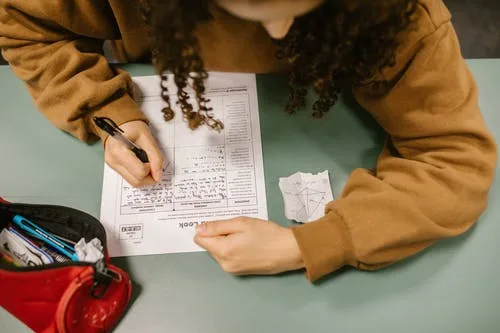
Sometimes the test is tomorrow and the studying has not happened yet. Knowing how to cram for a test well will not replace weeks of steady review, but it can make the hours you have left far more productive. The secret is not studying harder through the night. It is choosing the right material, testing yourself instead of rereading, and protecting enough sleep for your brain to hold on to what you learned.
This guide gives you a step-by-step cram plan, the techniques that work best under time pressure, a sample schedule and the mistakes that waste precious study time.
Does Cramming Actually Work?
Partly. Cramming can get information into your short-term memory well enough for a test that is a day or two away. It is much less effective for long-term learning. Research on the spacing effect consistently shows that people remember more when they study a subject in several shorter sessions spread over days than in one long session.
Most students who cram are not lazy. Some underestimate how much material there is, others juggle jobs, family and other classes, and many fall victim to Parkinson's Law: "Work expands so as to fill the time available for its completion." Three weeks feels like plenty of time until it suddenly is not. If you are already there, the goal is to make the most of the time you have.
Step 1: Triage the Material
Do not open your textbook at chapter one. Spend the first 20 to 30 minutes deciding what to study.
Gather everything: the syllabus, any study guide, lecture slides, your notes, homework, past quizzes and practice exams.
Find what is likely to be tested: topics on the study guide or covered in a review session, ideas your professor repeated or wrote on the board, and problem types from homework and quizzes.
Sort topics by value and confidence: use the table below to decide where your time goes.
You Know It Well
You Are Shaky
Heavily tested
Quick review only
Study first and most
Lightly tested
Skip
Study if time allows
Accept that you will not cover everything. Doing a strong job on the topics that carry most of the points beats skimming every page.
Step 2: Set Up Your Study Space
Have all your materials, paper, pens and a water bottle within reach before you start, so you do not lose momentum hunting for things. Put your phone in another room or turn on a focus mode, and close social media. A "quick check" can cost 20 minutes you do not have. Choose a place that works for you, whether that is a quiet library floor or a busy coffee shop, but avoid studying in bed.
Step 3: Study in Timed Blocks
Hours of nonstop studying lead to rereading the same paragraph without taking anything in. Work in timed blocks instead. The 50/10 rule (50 minutes of study, 10 minutes of rest) suits longer sessions, while the Pomodoro Technique (25 minutes on, 5 minutes off, with a longer break after four rounds) helps when focus is hard to hold. Give each block a specific goal, such as "finish the chapter 6 practice questions."
Cramming Techniques That Actually Work
Active Recall Instead of Rereading
Rereading and highlighting feel productive but do little for memory. Active recall means closing your notes and pulling the information out of your head: write down everything you remember about a topic, then check what you missed. Forcing yourself to retrieve information strengthens memory far more than reviewing it, which is why self-testing is the core of every good cram session.
Practice Questions and Old Exams
If your professor provides practice tests or old exams, they are the most valuable thing you can study. They show how questions are worded and which topics come up most. Answer them under realistic timing, then spend as long reviewing your mistakes as you spent answering. For quantitative classes, our guide on how to prepare for a math test explains how to practice problems efficiently.
Flashcards
Flashcards work well for vocabulary, formulas, dates and definitions. Put a question or term on one side and the answer on the other, shuffle them and sort them into "know it" and "not yet" piles. Keep cycling through the "not yet" pile. Making the cards is itself a form of studying, so write them quickly rather than beautifully.
Chunking
Your working memory can only juggle a few items at once, so group related information into chunks. Instead of memorizing 20 separate dates for a history exam, organize them by period or theme. In biology, group processes by stage; in pharmacology, group drugs by class. Chunks are easier to understand, remember and recall under pressure.
Mnemonics
Mnemonics turn hard-to-remember lists into something memorable. The classic example is "Please Excuse My Dear Aunt Sally" for the order of operations: parentheses, exponents, multiplication and division, addition and subtraction. Make up your own acronyms, rhymes or silly images for lists and sequences you keep forgetting.
Mind Maps and a One-Page Summary Sheet
For subjects full of connected ideas, draw a mind map with the main concept in the middle and related ideas branching out. At the end of your session, condense everything onto one page: key formulas, definitions and the points you keep forgetting. Deciding what earns a place on that sheet is a powerful review, and it becomes your test-morning study guide.
Say It Out Loud
Explain a concept out loud as if you were teaching it to a friend. Gaps in your understanding show up immediately when you try to explain something simply. Combining senses (writing, saying and sketching diagrams) keeps you engaged and helps information stick. Studying with friends can help too, as long as you quiz each other rather than chat.
How to Cram for a Test the Night Before
Here is a sample plan for one evening with about five hours to spare. Adjust the times to your schedule.
Time
Task
6:00 to 6:20 p.m.
Triage the material and list your priority topics
6:20 to 8:00 p.m.
Two 50-minute blocks on high-priority topics using active recall, with a 10-minute break
8:00 to 8:30 p.m.
Dinner and a real break away from screens
8:30 to 10:00 p.m.
Practice questions under timed conditions, then review every mistake
10:00 to 10:30 p.m.
Build your one-page summary sheet
10:30 to 11:00 p.m.
Quick flashcard self-quiz, then get ready for bed
Eat a proper meal and drink water rather than relying on energy drinks. If you use caffeine, have it earlier in the evening so it does not wreck your sleep. Most importantly, stop at a set time. Sleep is when your brain consolidates what you studied, and an all-nighter damages the attention and reasoning you need on the test.
On Test Day
Spend 20 to 30 minutes reviewing your summary sheet and hardest flashcards. Do not start new topics.
Eat breakfast and arrive early with everything you need.
If your instructor allows it, jot key formulas or mnemonics on your scratch paper as soon as the test begins.
Skim the whole test first, answer the questions you know, then return to the harder ones.
Mistakes That Waste Cram Time
Rereading and highlighting instead of testing yourself.
Rewriting notes neatly when you should be practicing with them.
Studying what you already know because it feels good.
Pulling an all-nighter and walking into the test exhausted.
Panicking about what you will not cover instead of mastering what you can.
How to Avoid Cramming Next Time
The best cram session is the one you do not need. Starting even a week out and studying 20 to 30 minutes a day, using the same active recall and practice questions, gives you the benefit of spaced practice with less stress. A simple study plan template helps you map review sessions across the term, and our guides to exam preparation strategies and effective study habits show how to build the routine.
If a topic still does not make sense, ask your professor or TA during office hours, or get one-on-one explanations through Ace My Homework's online homework help. Post the topic with your instructions and deadline, compare tutor bids, chat with a tutor before choosing and use the worked explanations to study for the test yourself. You can post your question here.
Frequently Asked Questions
Is Cramming Effective?
Cramming can help you recall information on a test that is a day or two away, but it is a poor way to remember material long term. Research on the spacing effect shows that studying in several shorter sessions spread over days leads to much better retention. If a cumulative final is coming, material you cram now will probably need to be relearned later.
Is It Better to Sleep or Stay Up All Night Studying?
Sleep, in almost every case. Sleep helps your brain consolidate what you studied, and going without it hurts attention, reasoning and recall, which are the skills a test measures. If time is tight, study your highest-priority material first, stop at a set time and get as much sleep as you can. Even a shorter night is better than none.
Can You Cram for a Test in One Day?
Yes, if you are strategic. Spend the first half hour deciding what is most likely to be tested, then work through those topics with active recall and practice questions in 50-minute blocks with 10-minute breaks. End the day with a one-page summary sheet and a quick self-quiz, then sleep. Accept that you cannot cover everything, and focus on the material worth the most points.
What Is the Fastest Way to Memorize Information for a Test?
Test yourself instead of rereading. Flashcards, practice questions and writing everything you remember on a blank page all use active recall, which strengthens memory more than reviewing notes. Group related facts into chunks, and use mnemonics or acronyms for lists and sequences. Saying answers out loud or explaining them to someone else also makes information stick faster.
How Do I Stay Focused While Cramming?
Remove distractions before you start: put your phone in another room, close social media and study somewhere you will not be interrupted. Work in timed blocks, such as 50 minutes of study and a 10-minute break, and set a small goal for each block. Eat a proper meal, drink water and avoid heavy caffeine late at night.
Should I Study the Morning of the Test?
A short review helps, but avoid learning new material. Spend 20 to 30 minutes going over your summary sheet, key formulas or the flashcards you found hardest. Then eat breakfast, gather what you need and arrive early. Trying to cram brand-new topics right before the test tends to raise anxiety and crowd out what you already know.
How Do I Cram for a Math Test?
Work problems instead of reading solutions. Redo homework and quiz questions without looking at the answers, then check and study every mistake. Make a short list of formulas and the problem types each one solves, and practice a few mixed problems so you learn to recognize which method to use. Our math test preparation guide has more detail.
Get affordable and top-notch help for your essays and homework services from our expert tutors. Ace
your homework, boost your grades, and shine in online classes—all with just a click away!
Find 250+ cause and effect essay topics for middle school, high school and college, sorted by subject, with tips to narrow a topic and sample thesis statements.
Don' have ⭐GOOD EXCUSE FOR MISSING WORK⭐ Let's find you the perfect excuse to get off work today without having any troubles with your boss or your fellow employees.
Learn how to do well in MyMathLab: use Help Me Solve This and the study plan the right way, avoid answer-entry mistakes and prepare for quizzes and tests.