Planning and prioritization of patient care is an essential and crucial skill for nursing practice and medical/healthcare professionals at large. It is a strategy used to manage access to healthcare services and ensure positive patient outcomes.
Prioritization of patient care is basically to ensure that the most critical patients receive appropriate care with urgency, while also addressing the needs of other patients. It entails analyzing each patient's requirements and deciding which treatment plan should be conducted first or which patients should be seen right away.
Patient prioritization in nursing can include tasks such as administering medication, performing procedures, providing comfort measures, and addressing patients’ emotional needs.
The prioritization of patient care requires the nurse to have strong critical thinking skills, effective communication skills, and the ability to make quick decisions under pressure. Patient prioritization also refers to the process of ranking referrals in a certain order based on various criteria to improve fairness and equity in the delivery of care.
What is patient care Planning?
Patient care is the prevention, treatment, and management of sickness, as well as the maintenance of physical and emotional well-being, provided by health professionals.
Patient care planning consists of the preparation of services to be rendered to a patient and correctly foreshadowing the outcomes for the benefit of the patient.
Healthcare professionals are required to uphold each patient's freedom, dignity, and right to informed consent, participation in decision-making regarding their care, refusal of medical treatment, confidentiality, and privacy. Every healthcare practitioner must treat each patient with respect while paying attention to their human rights.
What exactly is prioritization of patient care and why is it important?
This is the process of deciding the order of priority for giving care to patients based on their health state and the severity of their conditions. Prioritizing patient care is important for several reasons.
Prioritizing patient care is critical for providing safe, effective, and efficient nursing care. It assists nurses in effectively managing their workload, ensuring patient safety, and promoting favorable patient outcomes.
Guaranteeing Patient Safety Needs
Prioritizing patient care allows nurses to identify and address the most urgent patient requirements first, which can help prevent adverse events and improve patient safety.
Encourage the Efficient Use of Healthcare Resources
Prioritization of patient care can help maximize the use of healthcare resources by ensuring that patients receive the most suitable care for their requirements. This can help to cut healthcare expenses while also improving overall care quality.
Promote Optimal Patient Outcomes
Prioritization of patient care helps nurses focus on the most crucial components of care, which can lead to improved patient outcomes such as faster recovery periods, shorter hospital stays, and lower readmission rates.
Enhancing Inter-professional Collaboration
Prioritization of patient care requires collaboration between healthcare professionals, including physicians, nurses, and other healthcare providers. This collaboration helps to ensure that all aspects of patient care are addressed and that patients receive coordinated care. This partnership helps to guarantee that all elements of patient care are addressed and that patients receive coordinated treatment.
Maximizing Nursing Resources
Prioritizing patient care allows nurses to more effectively spend their time, skills, and resources, ensuring that patients receive the care they require when they require it
What are the Steps in Planning Patient Care
Step 1: Assessment
The first stage of care planning entails acquiring information on the patient's health status, medical history, and any social or environmental factors that may have an impact on their care. Physical examinations, evaluation of medical records, and consultation with other healthcare providers may be required.
Step 2: Make a Diagnosis
Following the completion of the evaluation, the nurse can utilize the information to determine the patient's health needs and construct a nursing diagnosis. This entails assessing data and determining current or probable health issues that necessitate nursing action.
Step 3: Outcomes and Planning
In this stage, the nurse establishes specific goals and objectives for the patient’s care and develops a care plan that outlines the nursing interventions required to achieve these goals. The care plan should be individualized to meet the patient’s unique needs and preferences.
Step 4: Put it into Action
The final stage of the care planning process entails assessing the patient's progress toward attaining their health objectives and evaluating the effectiveness of the nursing interventions. This information is then utilized to update the care plan and change the nursing actions as needed.
Step 5: Evaluation
The final stage of the care planning process involves evaluating the effectiveness of the nursing interventions and assessing the patient’s progress toward meeting their health goals. This information is then used to update the care plan and make any necessary adjustments to the nursing interventions.
How to Prioritize Care
Nursing is a gratifying career when patients experience quality care, and nursing prioritization is one of the most critical skills for patient satisfaction. When prioritizing patient care, it is frequently helpful to ask yourself these questions to ensure you make the best selections.
It is critical to determine what actions will hurt a patient if they are not completed immediately. Patient safety is crucial, and so is yours as a practitioner. Consider how to use all available resources to effectively manage time.
Best Tips for Prioritizing the Needs of Your Patients
Your job as a doctor or nurse is to offer the best possible care to your patients. Most of the time, especially with crisis patients, it is not possible to treat each medical condition or issue the same way and at the same time. You need to prioritize the various things affecting the patient to determine the correct order of treatment.
For example, you don't want to be preoccupied with a patient's sprained ankle while they're having difficulty breathing. You’ll have to attend to their breathing difficulties first, to stability before you attend to their ankle.
It is therefore critical to understand the common algorithms and methods used by healthcare providers to prioritize care, such as the ABCDE approach, CURE, and Maslow's Hierarchy of Needs
ABCDE Approach
The ABCDE technique is a standardized algorithm that intends to make it simple for healthcare personnel to identify and treat the most pressing concerns first, giving the patient the highest chance of survival.
It is one of the most successful approaches to assessing a patient's needs, it enables nurses and doctors to diagnose concerns and provide a solution for a patient in an emergency.
When a team of medical providers works together, the ABCDE technique promotes efficiency by allowing them to focus on treating the patient instead of spending time conferring on each step.
Airway, breathing, circulation, disability and exposure otherwise known by the mnemonic “ABCDEs,” are another foundational element to assist the nurse in prioritization.
Your first responsibility as a nurse is to remember that these ABCDEs are the most important to address in alphabetical order.
Airway
The first step in ensuring a patient's survival is to ensure they have a viable airway. As a result, step A is to assess the patient to see if they have a patent airway or if it is partially or completely clogged.
Breathing
The next stage is to evaluate the patient's breathing quality. Look for indicators of respiratory distress, assess the respiratory rate, pay attention to the depth of each breath, and, if possible, use a pulse oximeter. You can also percuss and auscultate the chest to see if the lungs are in good working order. It is critical to supply oxygen via a bag mask or rescue breaths, if available.
Circulation
Step C is the circulation process, it entails examining the patient's circulation. Changes in skin color, perspiration, hot or cold limbs, and an irregular pulse rate are all symptoms of poor circulation. Calculating the patient's capillary refill time and checking their blood pressure can provide you with further information about their circulation. If a patient has a high heart rate and/or chilly limbs, you should provide intravenous fluids unless the patient is in cardiac arrest.
Disability
This stage involves evaluating the patient's consciousness as well as the potential causes of diminished consciousness. The Alert, Voice, Pain, Unresponsive (AVPU) method and the Glasgow Coma Scale (GCS) are two commonly used assessment procedures.
It's also important to find out if the patient has been given any sedatives or analgesics. The treatment will be determined by the reason for the patient's incapacity.
Exposure
It is usually necessary to make a complete physical examination of the patient. When removing the clothes to expose the body, it’s vital to respect the patient’s dignity and consider heat loss.
During a physical exam, you can look for more clues about the patient’s condition, such as signs of trauma, bleeding, skin abrasions, and needle marks. This might help with stress management, especially when the patient is experiencing high trauma levels.
Maslow's Hierarchy of Needs
Maslow's hierarchy of needs and the nursing process are two other techniques for guiding prioritization decisions. When beginning a career in nursing, one of the first things you learn is Abraham Maslow's Hierarchy of Needs. The notion, named after psychologist Abraham Maslow, is to rank a person's basic needs in order of significance.
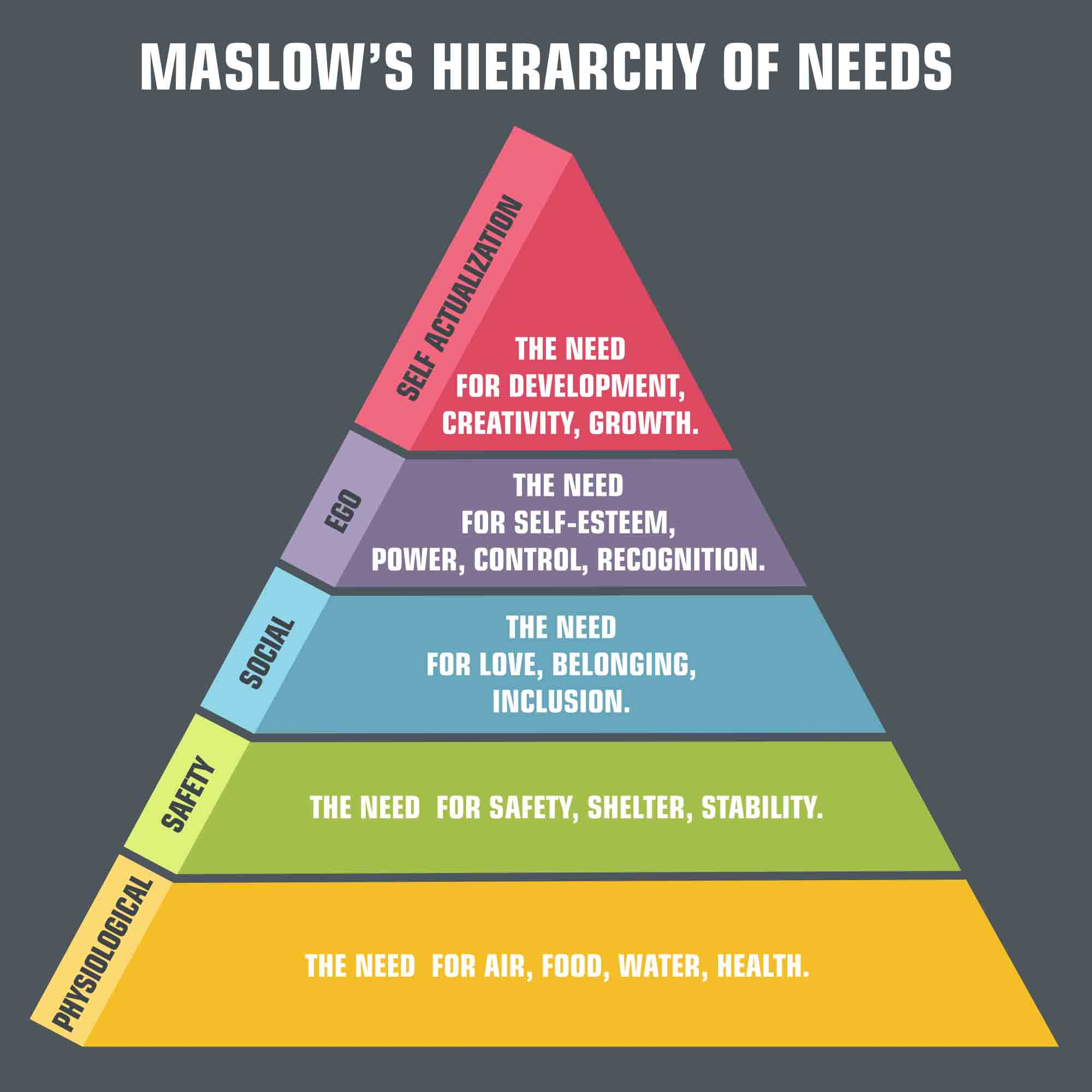
Maslow's Hierarchy of Needs is usually portrayed as a pyramid. In Maslow's hierarchy pyramid, human needs are categorized into several layers such that those near the bottom of the pyramid are the most critical.
They must be addressed before a person concentrates on the needs at the top of the pyramid. As a nurse or doctor, your objective is to offer care to your patients to meet their basic needs at the bottom of the pyramid.
Physiological Needs
Maslow’s Hierarchy of Needs places physiological needs as the foundational base of the pyramid. Physiological needs are the basic needs and they include oxygen, food, water, sex, sleep, homeostasis, and excretion. These are the most crucial things to focus on when you are caring for your patient. Health promotion and disease prevention initiatives are directly related to meeting these physiological demands.
Safety Needs
The second level of Maslow’s hierarchy reflects safety needs. This section of Maslow's hierarchy involves the need for safety and security. Together with physiological needs, safety needs make up the components of “basic needs.” Safety needs include elements that keep individuals safe from harm, such as financial stability, and personal and job security. Examples of safety needs in health care include fall precautions and efforts in disease prevention.
Love and Belonging Needs
The third level of Maslow’s hierarchy is the need for friendship and/or intimate relationships. It reflects emotional needs such as love and a sense of belonging. These needs often reflect both personal and universal human needs related to an individual’s relationships with family members and friends.
Esteem Needs
The fourth level of Maslow’s hierarchy includes real self-esteem and the need for recognition from others. Feelings of prestige and accomplishment are examples of the fulfillment of these needs.
Cognitive Needs
The Cognitive needs theory describes human intellectual activities, curiosity, and a desire for knowledge. Cognitive needs are often associated with human growth and the constant development of one's intellectual ability.
Aesthetic needs theory
In Maslow's hierarchy of needs, the Aesthetic needs theory is linked to a respect for beauty, art, and balance. They enhance an individual's psychological well-being and personal self-expression.
Self-Actualization Theory
The top level of Maslow’s hierarchy is self-actualization needs. This is the concept of a person achieving their full potential. Not everyone achieves fulfillment in this area. An example of addressing these needs in a health care setting is helping an individual build self-confidence in performing blood glucose checks that lead to improved self-management of their diabetes.
So How Does Maslow’s Theory Impact Prioritization?
The ideas behind the application of Maslow's hierarchy are critical. Addressing physiological needs before moving on to other need categories focuses attention on the most important aspects of improving patient well-being. Maslow's hierarchy provides a helpful framework for identifying and prioritizing key patient care needs for nurses.
Maslow's theory states that our actions are motivated by particular physiological and psychological needs that progress from basic to complex, such that lower-level needs must be satisfied before progressing to high-level ones.
In the medical world, making sure that a patient's physiological needs are taken care of is paramount first. Healthcare professionals ought to prioritize basic needs such as food, water, and shelter.
Emotional security is regarded to be essential by Maslow's theory. To provide patients with holistic care, you must pay attention to their emotional requirements, particularly those related to comfort and safety.
CURE Approach.
The CURE hierarchy uses the acronym “CURE” to guide prioritization based on identifying the differences between Critical needs, Urgent needs, Routine needs, and Extras
Critical Needs
in health care settings, patients with "critical" requirements demand prompt attention. Examples of critical requirements include signs of respiratory distress, chest pain, and airway compromise, which coincide with the ABCs and Maslow's hierarchy of needs.
Regardless of how complicated a shift is, nurses can be confident that meeting patients' critical needs is the best use of their time and energy.
Urgent Needs
The second in the CURE hierarchy after critical patient care needs have been met, is urgent needs Nurses can handle "urgent" needs. Urgent needs are defined as those that cause the patient distress or put the patient's safety in danger.
Routine Needs
The third level of the CURE hierarchy addresses "routine" patient requirements. Routine patient demands are also referred to as "typical daily nursing care" because they take up the majority of a standard nursing shift.
Routine daily nursing care includes acts such as medication administration and physical assessment. Although these normal patient needs are part of a nurse's typical shift in a hospital setting, they do not take precedence over essential or urgent patient needs.
Extras
The fourth level of the CURE hierarchy is called "extras." Extras are actions that are undertaken in the care setting to improve patient comfort but are not required. Extra activities could include giving a patient a massage or shampooing their hair. If a nurse has enough time to undertake extra activities, they contribute to a patient's sense of satisfaction with their care, but these activities are not required to accomplish patient outcomes.
Ways to help you decide whom to care for first.
When deciding on the patient to take care of first, there are several factors that a nurse needs to take into consideration. These factors can help you in deliberating the best decision to make. These factors that nurses may find valuable include:
-
The potential repercussions that the patient may experience if the situation is not addressed promptly.
-
If other minor tasks can quickly be completed or securely assigned to others.
-
If there are duties that require the assistance of another nurse or doctor, and which ones may be completed on your own
-
If some actions or behaviors may have a major impact on the patient's general state of health
Similarly, it is important to deliberate on how to efficiently utilize all available resources to manage time effectively.
1. ABCs
First, evaluate and treat the airway, breathing, and circulation (ABCs). These are the basic physiological needs that must be met for a patient to survive. If a patient is having difficulty breathing or has an obstructed airway, for example, quick assistance is required.
2. Manage Pain
Address patients' pain as soon as possible, as uncontrolled pain can have a severe impact on their general well-being and impede recovery.
3. Check on life-threatening Conditions
These are conditions that endanger one's life. Attend to patients who are in life-threatening situations, such as serious bleeding, cardiac arrest, or acute respiratory distress, as these require quick interventions and stabilization.
4. Take note of unstable vital signs
Patients with unstable vital signs, such as low blood pressure, a fast heart rate, low oxygen circulation, or an elevated temperature, should be prioritized. These symptoms may suggest a deterioration in the patient's condition and necessitate immediate attention.
5. Risk of harm:
Assess and treat patients who are at risk of harm, such as those who are at risk of trying to commit suicide and of falling, getting pressure ulcers, or making prescription errors, as well as those who attempted suicide. Put preventative measures in place to ensure patient safety
6. Changes in neurological status:
Patients with altered mental status, sudden confusion, or neurological deficits should be evaluated promptly, as these changes may indicate an underlying neurological emergency. During such an emergency, human behavior might change and nurses must be keen to check any of these changes.
7. Time-sensitive interventions
Identify and prioritize nursing interventions that have time-sensitive requirements, such as drug delivery, wound care, or diagnostic testing with precise timeframes.
8. Ongoing assessments
Reassess patients regularly and revise priorities based on changes in their condition. Adjust the care plan as needed to accommodate new needs.
9. Collaborative care
This entails coordinating care and communicating with members of the healthcare team, which may include physicians, specialists, and other healthcare workers. Collaborate to ensure that care is delivered in a seamless and coordinated manner.
10. Patient preferences and concerns
Even though patient preferences will be at the bottom of this list, consider the preferences, worries, and current requirements of patients. For instance, a patient's mental health, which is closely related to psychological science, should highly be considered during patient care.
Engage in effective communication and, if possible, involve patients in their treatment decisions. Ask the patients what makes them feel better and remember they have more experience with their body. This will bring about patient satisfaction.
Need a Professional to Prioritize Your Nursing Assignment?
Nursing is such an overwhelming discipline. When you are experiencing an awful burnout and can't take any more of that mountainous heap of assignments, our nursing experts will be at your disposal. They are experienced in tackling any concerns or problems you have promptly and skillfully.
Rather than stressing yourself out, it is better to put all your worries aside and hire nursing assignments experts at My Homework. To get the best help, find reliable and experienced nursing assignment experts to meet your academic needs and excel in your nursing studies. Get help now!