How to Use These Nursing Study Guides
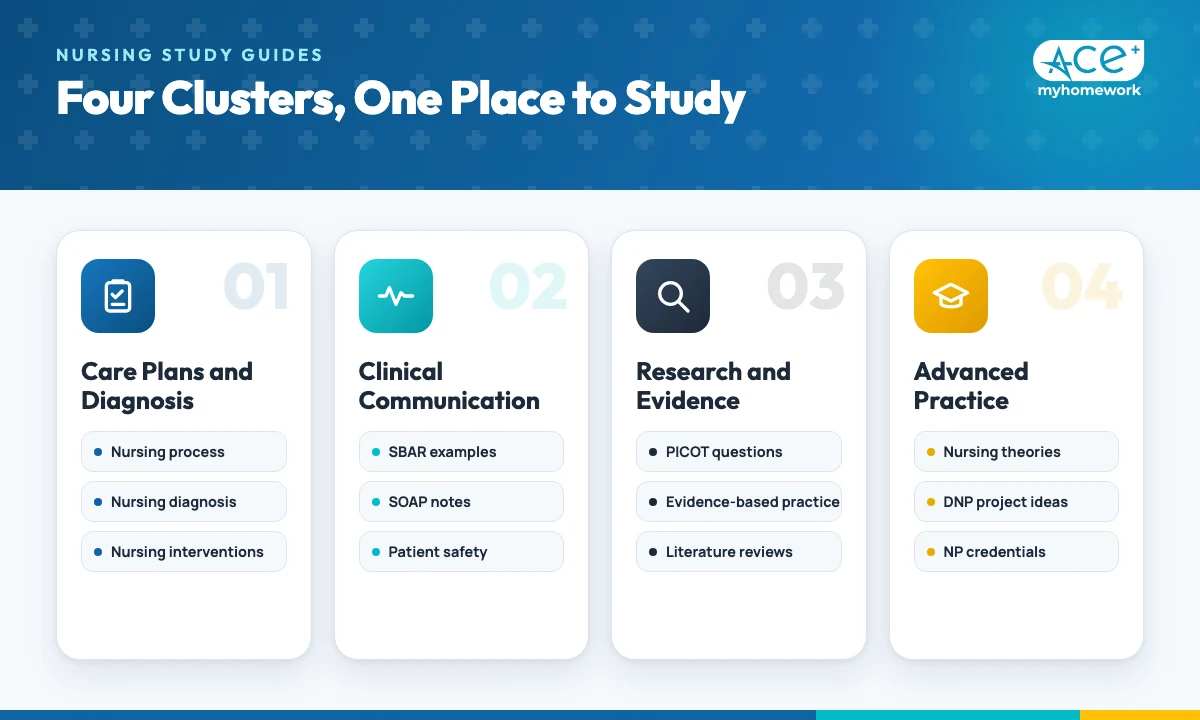
The guides are grouped into four clusters. Start with the cluster that matches the assignment or shift in front of you, then move to the linked guide for the full method.
The Nursing Process: The Framework Behind Nursing Practice
Almost every nursing assignment is built on the nursing process, the systematic method nurses use to plan and deliver individualized care for patients in every healthcare setting. Most nursing education programs teach it as five steps, often remembered as ADPIE. The American Nurses Association's standards describe the same cycle in six steps by separating outcomes identification from planning, so you may see either version.
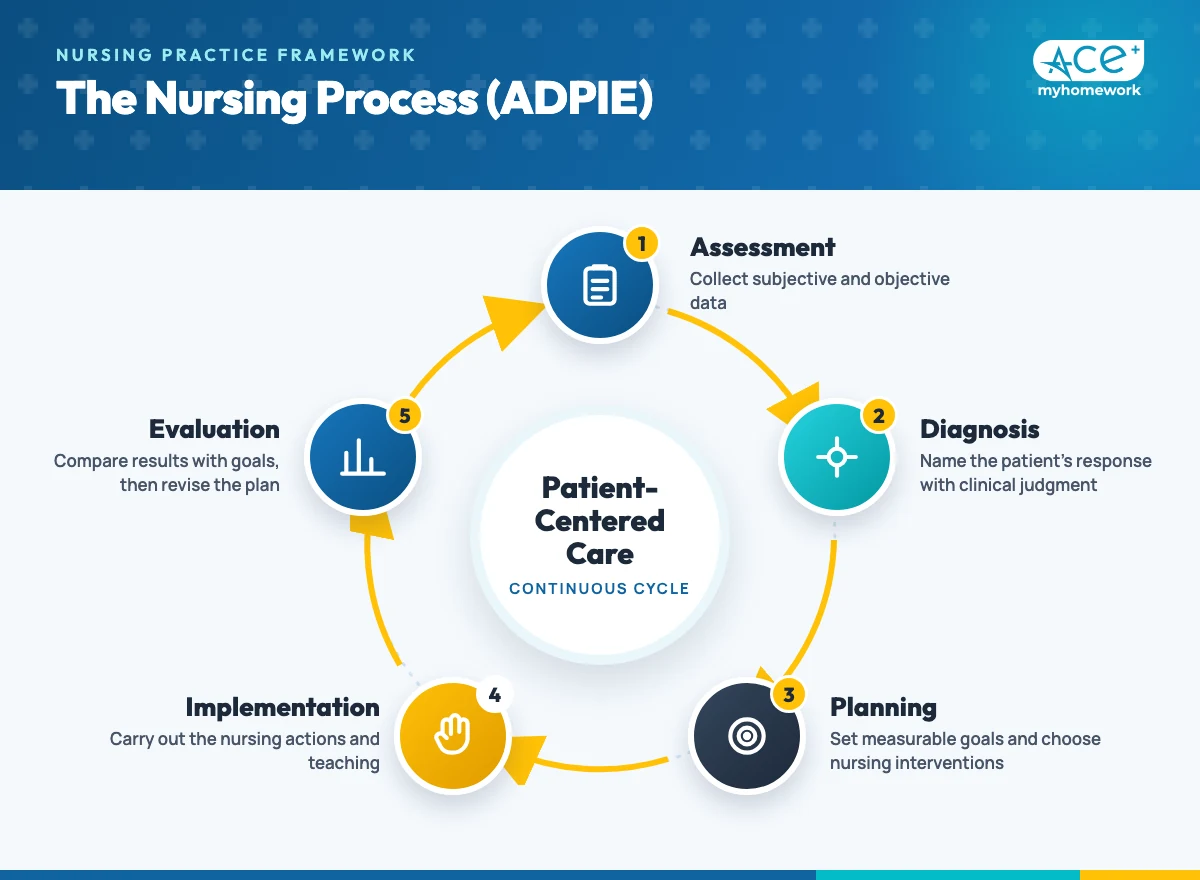
- Assessment: collect subjective data (what the patient reports) and objective data (vital signs, labs, physical findings). Good assessment depends on nursing knowledge of what is normal for the patient's age, condition, disease process and history.
- Diagnosis: use clinical judgment to name the patient's response to a health problem or life process. This is the nursing diagnosis, not the medical diagnosis; nurses treat the response while the provider leads treatment of the disease.
- Planning: set measurable, time-bound goals and choose the nursing interventions that will reach them.
- Implementation: carry out the nursing actions, including monitoring, giving prescribed drugs, patient education and coordination with the healthcare team.
- Evaluation: compare the patient's progress with the goals, then continue, revise or end each intervention. Recovery is rarely a straight line, so evaluation is ongoing.
The process is a cycle. Evaluation feeds the next assessment, which is why a care plan for an adult patient in an intensive care unit looks very different on day three than on admission.
Nursing Care Plans
A nursing care plan turns the nursing process into a written plan of patient care that nurses on every shift can follow. In nursing school it also shows your instructor how you think: why you chose a nursing diagnosis, what evidence supports each intervention and how you will know the plan is working.
Most care plan templates ask for the same columns:
| Column | What to Write |
|---|
| Assessment data | Subjective and objective findings that support the diagnosis |
| Nursing diagnosis | Diagnosis label, related factors or risk factors, and defining characteristics |
| Goals and outcomes | Specific, measurable and time-bound patient outcomes |
| Nursing interventions | Independent and collaborative nursing actions, with each intervention linked to a goal |
| Rationale | The reason and evidence for each intervention, drawn from nursing knowledge and research |
| Evaluation | Whether each outcome was met, partly met or not met, how recovery is progressing, and what changes next |
Example: Care Plan Focus for Gestational Diabetes
This is a common teaching case because it combines pregnancy, risk factors, patient education and long term follow-up. The American Diabetes Association recommends screening pregnant women without known diabetes at 24 to 28 weeks of pregnancy, and screening anyone diagnosed again 4 to 12 weeks after birth, then every 1 to 3 years for life.
- Assessment: glucose readings, diet and activity pattern, weight gain, knowledge of glucose monitoring, and risk factors such as high glucose in a previous pregnancy or a family history of diabetes.
- Possible nursing diagnoses: risk for unstable blood glucose level; deficient knowledge of glucose self-monitoring; risk for disturbed maternal-fetal dyad.
- Nursing interventions: the first intervention is to teach and observe glucose self-monitoring; review meal timing and portion choices with the dietitian's plan; explain the signs of hypoglycemia if insulin is started; schedule the postpartum screening before discharge.
- Evaluation: the patient records glucose readings correctly, readings stay within the range set by the provider, and the postpartum test is booked.
Example: Blood Pressure Control in Adult Patients
Blood pressure control is another care plan that appears in every BSN program, because so many patients live with hypertension. The 2025 American Heart Association and American College of Cardiology guideline keeps a target below 130/80 mm Hg for most adults, starting with lifestyle changes and adding medication when lifestyle changes alone do not reach the goal. For these patients, a care plan centres on accurate measurement, medication adherence, sodium and weight loss goals where appropriate, and teaching the patient to track readings at home. The health outcomes you evaluate are the readings themselves and the patient's ability to manage the plan, because uncontrolled blood pressure raises the risk of heart disease, stroke and kidney disease.
Nursing Diagnosis: Definitions, Types and How to Write One
A nursing diagnosis, sometimes shortened to diagnosis in care plan templates, is a clinical judgment about how a patient responds to an actual or potential health problem or life process. NANDA International (NANDA-I) publishes the standardized diagnosis labels and definitions that most programs use. Each NANDA-I nursing diagnosis comes with a definition, defining characteristics, and related factors or risk factors, and learning to read those definitions is one of the fastest ways to choose the right diagnosis.
The key difference to remember: a medical diagnosis names a disease or illness, such as pneumonia, while a nursing diagnosis names the patient's response to it, such as ineffective airway clearance. Nurses diagnose and treat the response; the provider makes the medical diagnosis and treats the disease. Patients often have several nursing diagnoses at once, so nurses rank them by priority, starting with airway, breathing, circulation and safety.
Types of Nursing Diagnosis
| Type | What It Describes | Example Label |
|---|
| Problem-focused | A response that is present now | Acute pain |
| Risk | A response the patient is vulnerable to, based on risk factors | Risk for infection |
| Health promotion | Readiness to improve health or well-being | Readiness for enhanced sleep |
| Syndrome | A cluster of diagnoses that occur together | Chronic pain syndrome |
How to Write a Nursing Diagnosis Statement
Most programs teach the three-part PES format for a problem-focused nursing diagnosis: the Problem (the diagnosis label), the Etiology (related to) and the Signs and symptoms (as evidenced by). For example: acute pain related to surgical incision as evidenced by a pain score of 7 out of 10 and guarding of the abdomen. A risk diagnosis has no signs or symptoms yet, so it uses two parts: the label and the risk factors.
When you check your diagnosis against the NANDA-I definitions, ask three questions: does the definition match what you assessed, do you have at least one defining characteristic or risk factor, and can nursing interventions change the outcome? If the answer to the last question is no, you may be describing a medical diagnosis or a collaborative problem instead. Getting this right is a core part of nursing knowledge, and it is the step instructors check first.
Worked examples: Risk for Bleeding nursing diagnosis and care plan and nursing diagnosis for type 2 diabetes.
Patient Safety and Injury Prevention
Patient safety is part of every nursing care plan for patients in every healthcare setting, and questions about preventing harm make up a significant portion of nursing exams. Nurses are often the last check before an error reaches patients, so nursing students learn a set of standard safety practices from their first clinical rotation.
Falls and Risk for Injury
Falls are a leading cause of injury in hospitals and long term care. Nurses use a fall risk tool such as the Morse Fall Scale on admission and after any change in condition. Risk factors include a history of falls, drugs that cause dizziness or sedation, confusion, weakness after illness or surgery, and urgency to use the toilet. These factors influence how often nurses check on patients and which precautions they choose. Nursing interventions include a low bed, non-slip footwear, scheduled toileting, a call light within reach and clear communication about the patient's risk at every handoff. The matching nursing diagnosis is usually risk for falls or risk for injury.
Pressure Injury Prevention
Pressure injury develops when pressure or shear reduces blood flow to the skin and tissue, most often over bony areas. Nurses assess risk with the Braden Scale and stage any injury using the National Pressure Injury Advisory Panel system, from stage 1 to stage 4 plus unstageable and deep tissue injury. Repositioning, moisture management, nutrition for wound recovery and support surfaces are the core nursing actions, and daily skin assessment shows whether they are working. Patients with limited mobility, poor nutrition or incontinence need the closest attention.
Medication Safety
Medication errors are among the most common preventable harms in patient care. Nursing students learn the rights of medication administration, starting with the right patient, right medication, right dose, right route and right time, and many programs add right documentation, right reason and right response. Before giving any dose, nurses check allergies, relevant labs and vital signs, and they teach patients what each medication is for so the patient can act as another safety check after discharge.
SBAR Examples for Clinical Practice
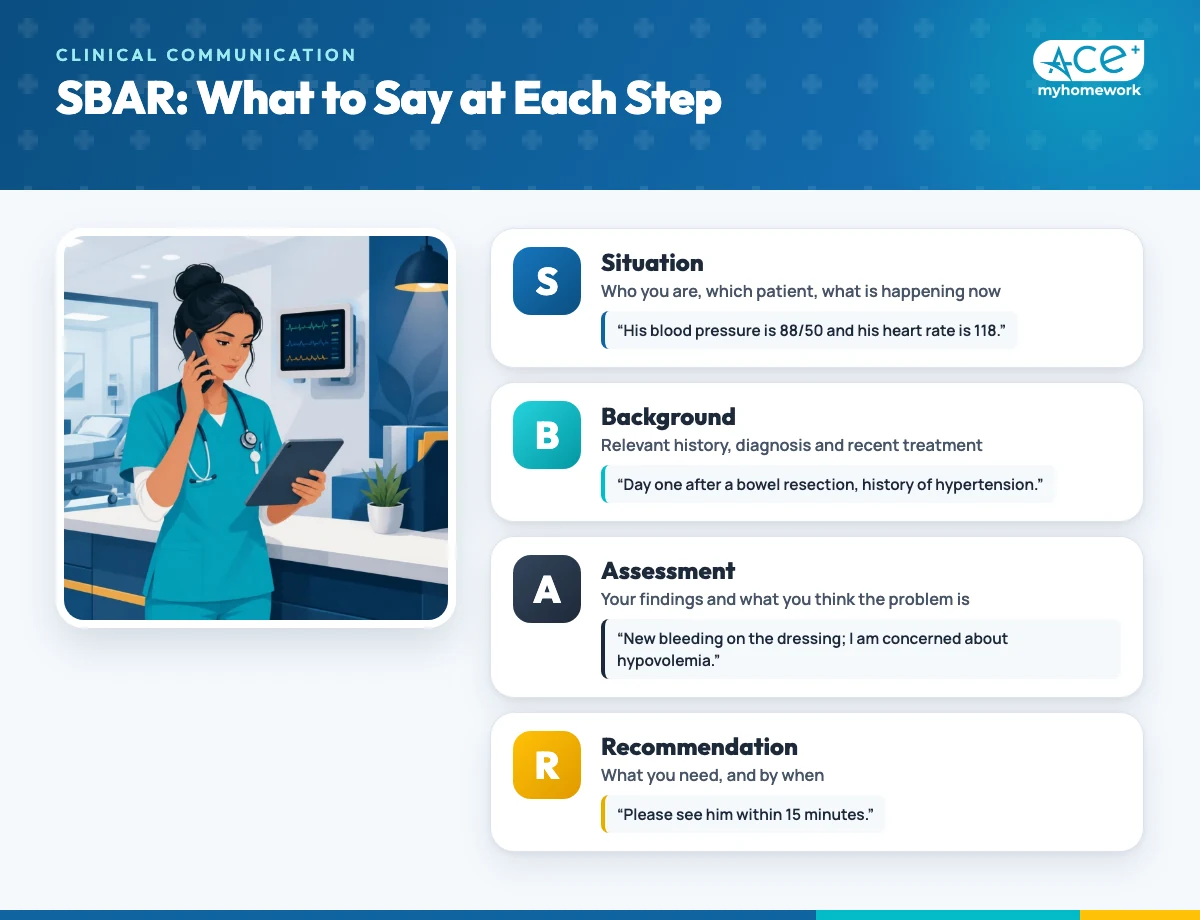
SBAR stands for Situation, Background, Assessment and Recommendation, and its main value is clinical clarity: the person receiving the report knows exactly what is happening and what is being asked. It began as a communication method in US Navy practice and was adapted for healthcare at Kaiser Permanente, where it became a standard way to report a change in a patient's condition. Nursing education uses it because it makes a handoff short, complete and easy to act on, which protects patients when time matters.
| Part | What to Say |
|---|
| Situation | Who you are, which patient, and what is happening now |
| Background | Relevant history, diagnosis, medications and recent treatment |
| Assessment | Your findings and what you think the problem is |
| Recommendation | What you need and by when |
SBAR Example in Acute Care
This is a teaching example, not a real patient. The RN calls the provider after a sudden change, which is one of the most common reasons nurses use SBAR with patients in acute care.
- Situation: "This is Sam, the RN on the surgical unit calling about Mr. Lee in room 12. His blood pressure is 88/50 and his heart rate is 118."
- Background: "He is a 67-year-old adult patient, day one after a bowel resection, with a history of hypertension. His blood pressure was 128/76 four hours ago."
- Assessment: "His abdominal dressing has new bleeding and he is pale and restless. I am concerned about bleeding and hypovolemia."
- Recommendation: "I need you to see him within 15 minutes. Do you want a complete blood count and a fluid bolus while you are on your way?"
Nurses use the same structure for a handoff in an intensive care unit, a call to a provider from a long term care facility or a written note in clinical settings. For the written record that follows, see the SOAP note example and template.
PICOT Questions and Evidence-Based Practice
Evidence-based practice means combining the best research evidence with clinical expertise and patient preferences to make care decisions. It is how nursing science reaches the bedside and how nurses support patients with care that is known to work, and it starts with a focused clinical question. Nursing students learn to write that question in PICOT format:
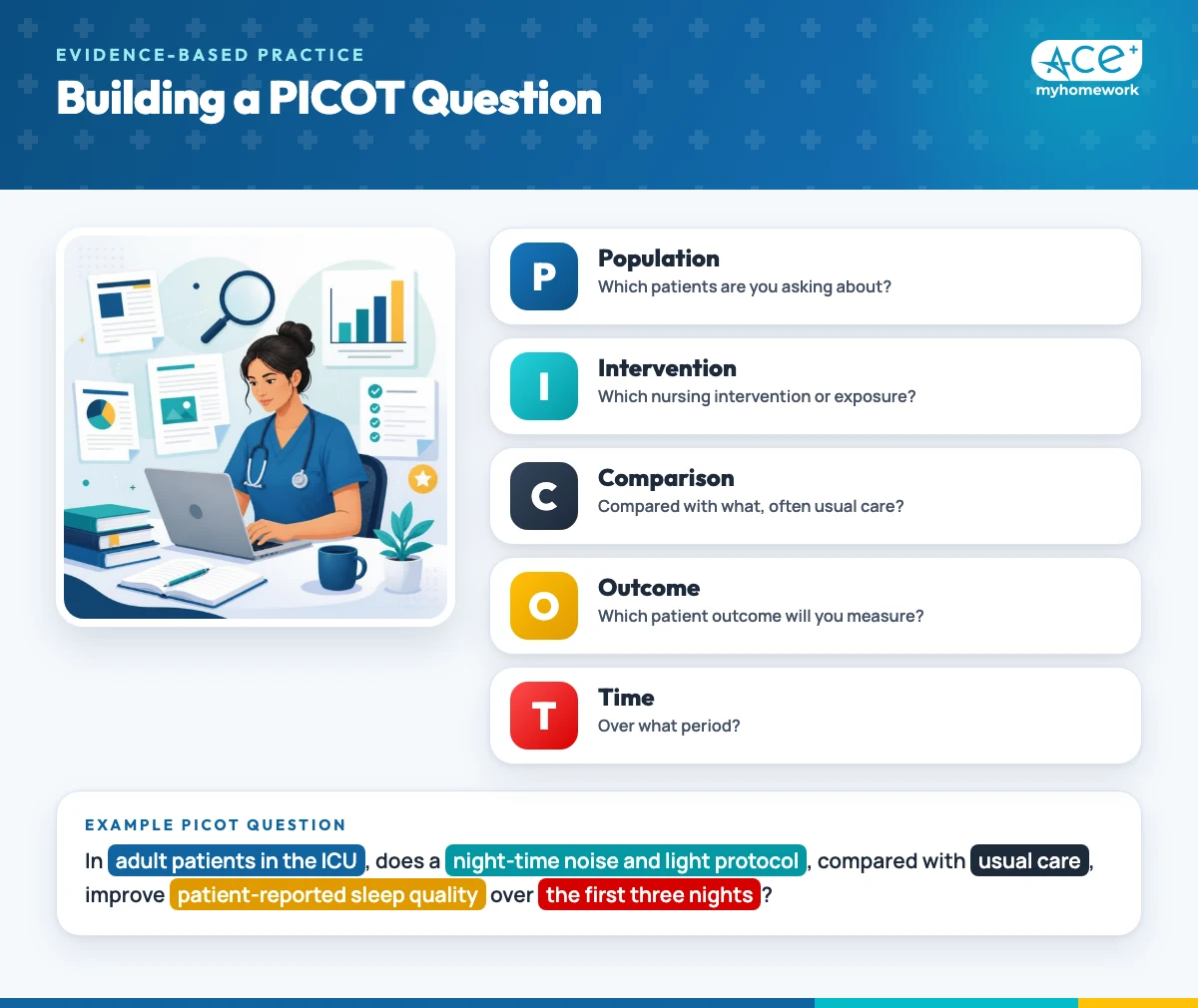
- Population: which patients, for example adult patients in an intensive care unit or pregnant women in prenatal care
- Intervention: the nursing intervention or exposure you want to study, such as an education intervention
- Comparison: the alternative, often usual care
- Outcome: the patient outcomes you will measure
- Time: the time frame for the outcome
Evidence-Based Practice Question Examples
- In adult patients in the intensive care unit (P), does a noise and light reduction protocol at night (I), compared with usual care (C), improve patient-reported sleep quality (O) over the first three nights (T)?
- In adults with hypertension in primary care (P), does nurse-led telephone follow-up (I), compared with usual clinic visits (C), improve blood pressure control (O) at six months (T)?
- In parents of adolescents attending a community clinic (P), do nurse reminder calls (I), compared with written reminders alone (C), increase HPV vaccination rates (O) over 12 months (T)?
- In adults with obesity and type 2 diabetes (P), does a structured weight loss education program (I), compared with standard advice (C), reduce HbA1c (O) at six months (T)?
Once the question is set, the evidence-based process continues: search the literature, appraise the evidence, apply it to the patient population and evaluate the results. Each step builds clinical skill and research knowledge that nurses use throughout their careers. Full guides: PICOT question examples, weak vs strong, how to write a PICOT question, 120 nursing research topics and the literature review worked example.
Chronic Conditions and Health Promotion
Chronic conditions such as hypertension, diabetes, heart failure, chronic obstructive pulmonary disease and depression account for a significant portion of patient care in primary care and hospital practice. Nursing care for chronic disease shifts the focus from a single episode of illness to long term self-management, prevention of complications and quality of life.
Health outcomes depend on more than treatment in the healthcare system. Social determinants of health, such as income, education, housing, food access and transport, influence health and influence whether patients can follow a care plan, attend appointments and afford medication. A strong nursing assessment asks about these factors and connects patients with community support, because the effectiveness of any intervention depends on whether the patient can carry it out at home.
Health promotion is the other half of this work, and nurses have a strong influence on patients' choices because patients see them often and trust their advice. Nurses support patients to make changes; they screen, teach and encourage healthy habits at every stage of life, from vaccination and prenatal education to physical activity, sleep and fall prevention in older adults. For patients with serious illness, nurses also help patients with advance care planning, so treatment matches what the patient wants. In community health courses, nursing students often design a health promotion project for a specific population, which is a good place to practice writing measurable outcomes.
Nursing Theories in Nursing Practice
Nursing theories explain what nursing is, what it aims to achieve and how nurses should think about patients, health and the environment. They are the foundation of nursing science and give nursing knowledge its structure, and many programs ask nursing students to apply one to case studies or a practice problem. These are among the theories you will meet most often:
| Theorist | Theory | Core Idea for Practice |
|---|
| Florence Nightingale | Environmental theory | Clean air, light, quiet and hygiene support recovery |
| Hildegard Peplau | Interpersonal relations | The nurse-patient relationship is itself therapeutic |
| Dorothea Orem | Self-care deficit theory | Nursing supports patients when they cannot meet their own self-care needs |
| Sister Callista Roy | Adaptation model | Nursing helps people adapt to changes in health and environment |
| Jean Watson | Theory of human caring | Caring relationships are central to healing |
| Patricia Benner | From novice to expert | Clinical skill develops in stages through experience |
To apply a theory, link its main concept to your patients and their situation. Orem's theory fits a discharge plan for a patient learning insulin injections; Benner's model fits a reflective paper on your own development from student to new nurse.
DNP Project Ideas and Advanced Practice Nursing
A Doctor of Nursing Practice (DNP) project translates existing evidence into practice and measures the results in a real setting. It differs from a PhD dissertation, which generates new knowledge through original research. Strong DNP project ideas start from a practice problem you can observe and measure.
- Mental health: depression screening in primary care, or a de-escalation training program on an inpatient unit
- Primary care: nurse-led follow-up for blood pressure control, or diabetes self-management education
- Acute care: early mobility protocols in the intensive care unit, or sepsis screening in the emergency department
- Women's health: postpartum glucose screening after gestational diabetes
- Oncology: symptom screening tools for patients receiving chemotherapy
- Nurse anesthesia (CRNA): warming protocols to prevent perioperative hypothermia
Nursing Roles, Education and Credentials
Nursing is a trusted profession, and the nursing profession has several entry points and many paths to advance. Knowing the roles helps nursing students understand scope of practice questions on exams and plan their own development.
| Role | Typical Education | Licensure or Certification |
|---|
| Certified nursing assistant (CNA) | State-approved training program | State competency exam |
| Licensed practical or vocational nurse (LPN/LVN) | Diploma or certificate program, about one year | NCLEX-PN |
| Registered nurse (RN) | Associate degree in nursing (ADN) or Bachelor of Science in Nursing (BSN) | NCLEX-RN |
| Advanced practice registered nurse (APRN) | Master of Science in Nursing (MSN) or Doctor of Nursing Practice (DNP) | National board certification in a population focus |
RN, BSN and RN-to-BSN
Every RN passes the same NCLEX-RN exam, whether they studied in an ADN or a BSN program. The difference is the depth of education: a BSN program adds coursework in leadership, research, community health and evidence-based practice. In 2010 the Institute of Medicine's Future of Nursing report recommended increasing the share of BSN-prepared nurses, and many hospitals now prefer or require a BSN for new RN hires. That is why many nurses who start with an ADN later complete an RN-to-BSN program while they work.
RN-to-BSN students are often working nurses and college students at the same time, so their assignments lean on clinical practice: a quality improvement proposal for their own unit, an evidence-based practice paper on a problem they see on shift, or a reflection on their professional development as a nurse.
From Nursing Student to New RN
After graduation, every new RN must pass the NCLEX-RN before practicing. The first year as an RN is a steep learning curve, and many hospitals run nurse residency programs to support new graduates with a preceptor, regular check-ins and further education. New nurses who keep learning as they advance through their first year, ask questions and use clinical reasoning tools such as SBAR build confidence faster and advance sooner to charge nurse, specialty certification or graduate study.
RN development continues throughout a career, and the RN role itself keeps changing as healthcare changes. Many RNs earn a specialty certification in areas such as critical care or oncology, and those who want to advance into advanced practice return for an MSN or DNP while working as an RN. Employers often support this with tuition help, because experienced RN staff improve care for patients.
Advanced Practice Roles
Advanced practice registered nurses hold an active RN license and graduate education, which lets them advance into roles with wider responsibility for patients. The four APRN roles are nurse practitioners, clinical nurse specialists, certified registered nurse anesthetists (CRNAs) and certified nurse-midwives. Nurse practitioners diagnose and treat illness, order tests and prescribe medication within their state's scope of practice, and they work in primary care, acute care and specialty areas such as oncology and mental health, often as the main healthcare provider for their patients.
Nurse Practitioner Credentials Explained
Advanced practice nurses take a national board certification exam after graduate education. The letters after a nurse practitioner's name show the population focus and the certifying body:
| Credential | Role | Certifying Body |
|---|
| FNP-BC | Family Nurse Practitioner, Board Certified | American Nurses Credentialing Center (ANCC) |
| FNP-C | Family Nurse Practitioner, Certified | American Academy of Nurse Practitioners Certification Board (AANPCB) |
| AGPCNP-BC | Adult-Gerontology Primary Care Nurse Practitioner | ANCC |
| AGACNP-BC | Adult-Gerontology Acute Care Nurse Practitioner | ANCC |
| AGCNS-BC | Adult-Gerontology Clinical Nurse Specialist | ANCC |
FNP-BC and FNP-C lead to the same family nurse practitioner role; the credential shows which board certified the nurse. Both boards require an active RN license as a registered nurse (RN) and an accredited graduate program, and nurses can hold certification from one board or both. You will see FNP-BC on a nurse practitioner's badge when ANCC certified them and FNP-C when AANPCB did.
Key Nursing Definitions
Clear definitions prevent the most common mistakes in care plans and exam answers. These are the definitions nursing students mix up most often, written in plain language so you can check your nursing knowledge quickly:
| Term | Definition |
|---|
| Nursing diagnosis | A clinical judgment about a patient's response to an actual or potential health problem or life process |
| Medical diagnosis | The disease or condition identified and treated by the provider |
| Collaborative problem | A complication that nurses monitor and manage together with the provider, such as hypoglycemia in a patient on insulin |
| Defining characteristics | The signs and symptoms that confirm a problem-focused nursing diagnosis |
| Related factors | The causes or contributing conditions of a nursing diagnosis |
| Risk factors | Conditions that make a patient vulnerable to a problem that is not present yet |
| Independent intervention | A nursing action a nurse can start without a provider's order, such as repositioning or patient teaching |
| Dependent intervention | A nursing action that requires a provider's order, such as giving a prescribed medication |
| Patient outcomes | The measurable changes in a patient's condition, knowledge or behaviour that a care plan aims for |
| Clinical judgment | The process nurses use to recognize and analyze cues, choose priorities, act and evaluate the results |
| Scope of practice | The activities a nurse is legally allowed to perform under state law and their license |
| Delegation | Assigning a task to another member of the team while keeping responsibility for the outcome |
When you read the NANDA-I definitions for each nursing diagnosis in your course text, pay attention to the defining characteristics and related factors listed under each one. Those lists are what your instructor expects to see in the assessment and nursing diagnosis columns of a care plan.
Study Strategies for Nursing Students
Nursing school asks you to learn a large amount of content and apply it under time pressure. These study habits help nursing students build confidence before exams and clinical shifts:
- Study by concept, not by chapter. Nursing students learn faster this way. Group content around a body system or nursing concept, such as perfusion or glucose regulation, and link the pathophysiology, medication and nursing actions together.
- Practice with case studies. Work through case studies with real patient details. Case studies train the clinical judgment tested in the Next Generation NCLEX: recognize cues, analyze them, prioritize, act and evaluate.
- Learn the definitions before you advance to the next topic. Many exam errors come from mixing up terms such as risk for and actual, or independent and collaborative interventions. Use the definitions table above as a quick check.
- Make it practical. Link each topic to patients you cared for and to what the RN on that unit did. Practical recall is stronger than a list of facts.
- Write care plans for real patients. Patients you have met are easier to remember than textbook cases. After each clinical day, draft one nursing diagnosis with goals, interventions and evaluation.
- Review drugs by class. Learn the class action, key side effects and the nursing assessment for each class before memorizing individual drugs. Ask your clinical instructor or pharmacist for support when a drug is new to you.
- Protect sleep before exams. Sleep has a strong influence on exam performance: recall and attention depend on rest, which is easy to lose when clinical hours and coursework overlap.
Get Help From a Nursing Tutor
If you are stuck on a care plan, a PICOT question or a DNP project proposal, you can post the assignment and compare bids from tutors on AceMyHomework. See nursing homework help for the subjects covered, or capstone project help for larger projects.

 Client Reviews