In a nursing care plan, seizure care focuses on keeping the patient safe during and after a seizure, protecting the airway, recognizing when a seizure becomes an emergency and helping the patient manage their condition over time. NANDA-I has no diagnosis called "seizure," so the plan is built on the patient's responses, most often Risk for physical injury, airway and aspiration risk, and gaps in self-management or knowledge. Safety precautions, accurate observation and teaching are the core nursing interventions.
This guide covers seizure types under the 2025 ILAE classification, how to choose a nursing diagnosis of seizure-related problems, seizure first aid and when to call for emergency help, a seizure precautions checklist, documentation, and a complete care plan example.
Seizure Basics for Your Care Plan
A seizure is a sudden, temporary burst of abnormal electrical activity in the brain that changes movement, sensation, behavior or awareness. Epilepsy is a condition of recurrent unprovoked seizures. Seizures can also be provoked by acute causes such as low blood glucose, low sodium, alcohol withdrawal, head injury, infection or, in people with epilepsy, missed medication and sleep deprivation. Your assessment should always ask whether a reversible cause is present.
In 2025 the International League Against Epilepsy published an updated seizure classification. It keeps four main classes: focal, generalized, unknown (whether focal or generalized) and unclassified. Focal seizures are now described by whether consciousness is preserved or impaired, assessed through the person's awareness and responsiveness. Familiar terms such as generalized tonic-clonic, absence and focal to bilateral tonic-clonic seizures are still used. For a care plan, the key points are what the seizure looks like, whether the person loses consciousness and how long it lasts.
Duration matters because of status epilepticus. The ILAE task force led by Trinka and colleagues set five minutes as the point at which a tonic-clonic seizure should be treated as continuous seizure activity, and 30 minutes as the point after which long-term harm becomes likely. This is why "time the seizure" is the first step in every first aid guide.
Nursing Diagnosis of Seizure: Choosing NANDA-I Labels
Because a seizure is a medical event, you diagnose the patient's response to it. The diagnoses most often used in seizure care plans are:
Risk for physical injury (called Risk for injury in earlier NANDA-I editions and in many textbooks): falls, head strikes, burns or drowning during a seizure.
Risk for aspiration or Ineffective airway clearance: secretions, vomiting or loss of protective reflexes during and after a seizure.
Ineffective health self-management: missed doses, unmanaged triggers or no seizure action plan.
Inadequate health knowledge (formerly Deficient knowledge): new diagnosis or new medication.
Excessive anxiety or Excessive fear (formerly Anxiety and Fear): worry about the next seizure, stigma or loss of independence.
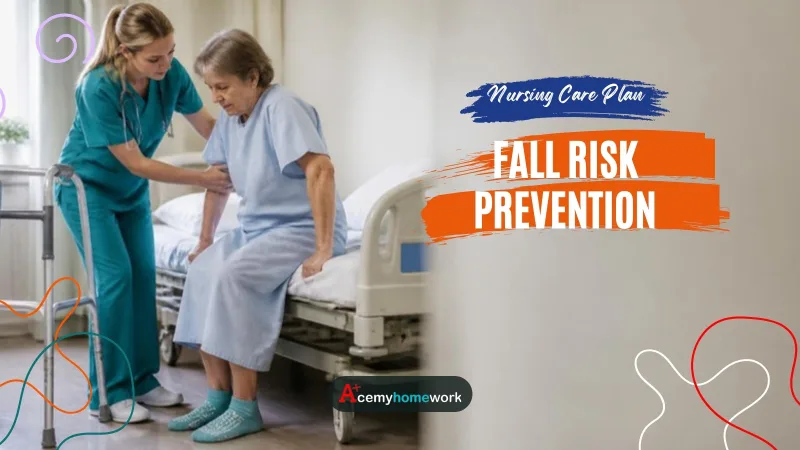
Risk for adult falls: if medications cause dizziness or unsteadiness. See our fall risk nursing care plan for that diagnosis in detail.
A risk diagnosis is written with risk factors, for example: "Risk for physical injury related to generalized tonic-clonic seizures and recent missed doses of antiseizure medication." A problem-focused diagnosis needs related factors and evidence, for example: "Ineffective health self-management related to a complex medication schedule, as evidenced by three missed doses this week and a breakthrough seizure." Our guide to nursing diagnosis examples explains the PES format, and our list of common nursing diagnoses shows where these labels sit in the NANDA-I domains.
Seizure First Aid: What to Do During a Seizure
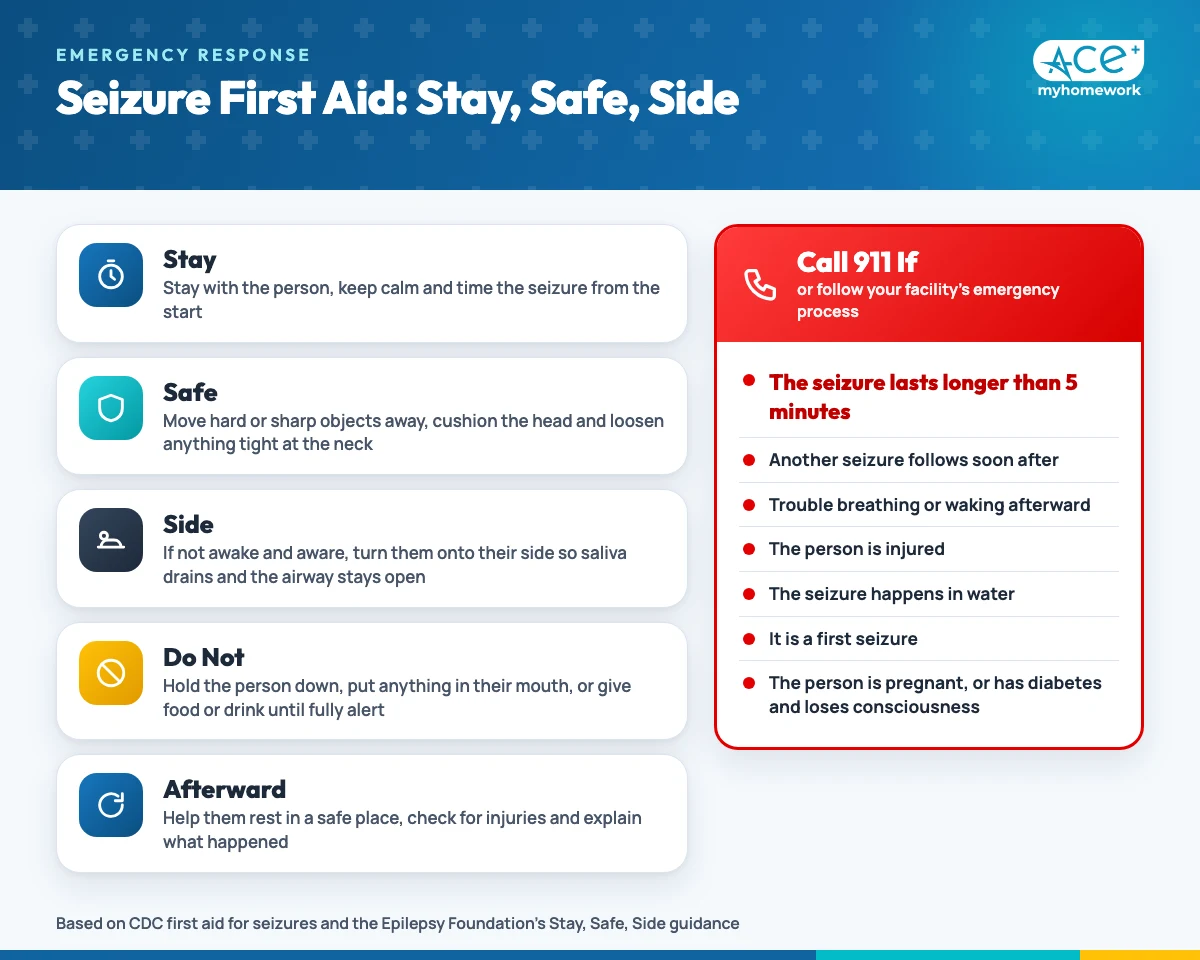
The CDC's seizure first aid guidance and the Epilepsy Foundation's Stay, Safe, Side approach agree on the basics. Stay with the person and time the seizure. Keep them safe by moving hard or sharp objects away and cushioning the head. If they are not awake and aware, turn them onto their side so saliva can drain and the airway stays open. Loosen anything tight around the neck.
Seizure first aid steps and when to call emergency services. Based on CDC and Epilepsy Foundation guidance.
Do not hold the person down, put anything in their mouth or give food or drink until they are fully alert. The CDC advises calling 911 if:
The seizure lasts longer than 5 minutes
Another seizure follows soon after the first
The person has trouble breathing or waking afterward
The person is injured during the seizure
The seizure happens in water
It is the person's first seizure, or they are pregnant, or they have diabetes and lose consciousness
In the Hospital
Inpatient care adds a few steps. Call for help using your facility's emergency or rapid response process, stay with the patient and note the start time. Lower the bed to its lowest position, turn the patient to the side if possible, and protect them from the side rails and equipment. Once the movements allow, give oxygen and suction the mouth as needed. Check a point-of-care blood glucose because hypoglycemia is a treatable cause. Have IV access ready for ordered medications. The American Epilepsy Society guideline on convulsive status epilepticus supports a benzodiazepine as the first treatment for a seizure lasting five minutes or more, so know where your unit's emergency medications are kept and give them only as ordered or per protocol.
Observing and Documenting a Seizure
Your description may help the team decide what type of seizure occurred and how to treat it, so record what you saw, not just "patient had a seizure." Include:
The time it started and stopped, and the total duration
What the patient was doing beforehand and any warning (aura) they described
Where the movements started, which body parts were involved and whether they spread
Eye position, head turning, facial movements and any automatisms such as lip-smacking
Responsiveness during the event and whether the patient remembers it
Color, breathing, incontinence and tongue biting
The length and nature of the postictal phase, such as confusion, sleepiness or temporary weakness of one side
Vital signs, oxygen saturation, blood glucose, injuries and every intervention with the patient's response
A structured note format such as SOAP keeps this organized. If you need to call the provider, an SBAR report lets you give the duration, findings and actions in under a minute.
Seizure Precautions Checklist
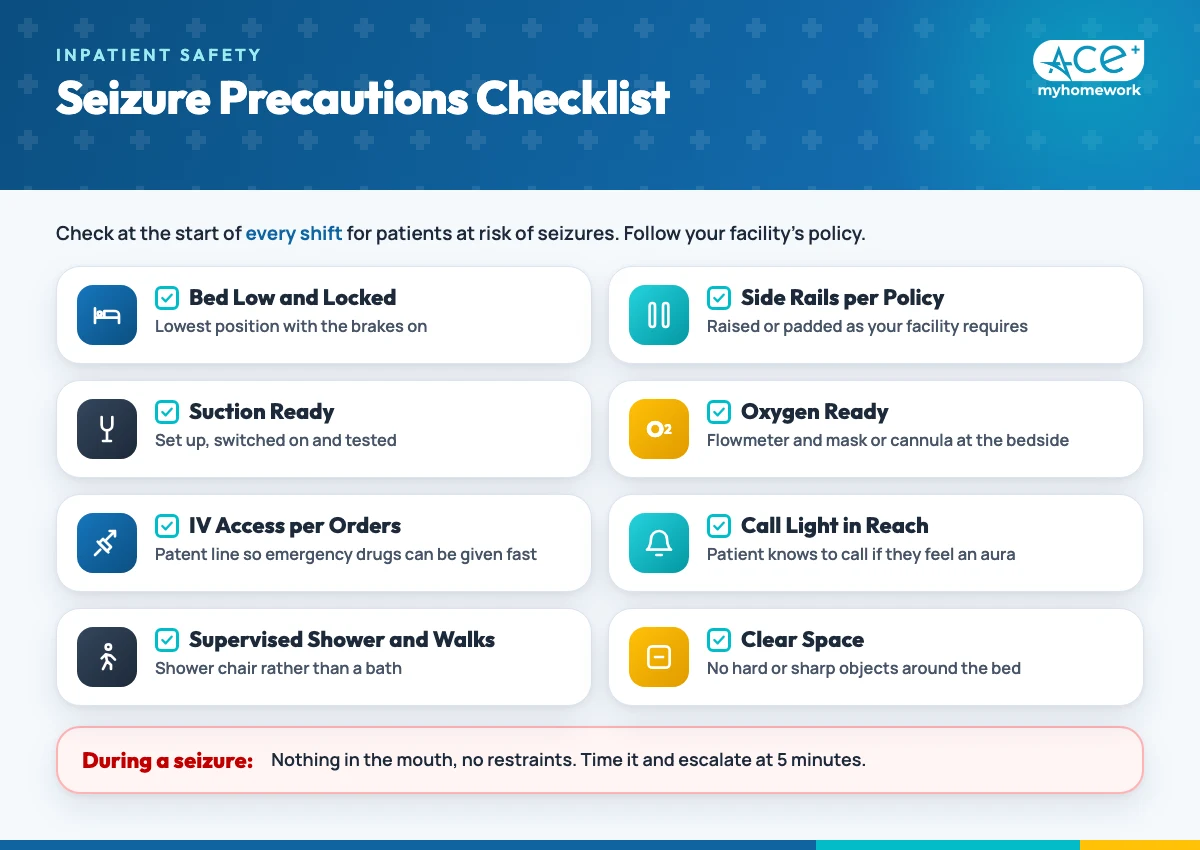
These are standing safety measures for patients at risk of seizures, such as those with known epilepsy, alcohol withdrawal, recent brain injury or surgery, or a seizure on admission. Exact requirements vary between facilities, so follow your policy. Common elements include:
Seizure precautions checklist for inpatient care. Requirements vary by facility policy.
Bed low and locked, with side rails raised or padded according to policy
Working suction and oxygen at the bedside, checked at the start of each shift
IV access maintained if ordered, so emergency medication can be given quickly
Call light within reach and the patient taught to call for help if they feel an aura
Supervised bathing and walking, using a shower chair rather than a bath
A clear space around the bed, free of hard or sharp objects
Nothing in the mouth during a seizure and no restraints, which can cause injury
Padded side rails are widely used but practice varies, and some facilities no longer require them. In a care plan assignment, describe what your facility's policy requires and why.
Nursing Care Plan Seizure Example
For example, take a hypothetical 34-year-old man with known focal epilepsy who is admitted after a focal to bilateral tonic-clonic seizure at work. He says he missed several doses of his antiseizure medication this week because of night shifts and has slept about four hours a night. He bit his tongue during the seizure, and he is now alert and oriented but worried about losing his job.
Nursing Diagnosis
Expected Outcomes (SMART)
Nursing Interventions
Rationale
Evaluation
Risk for physical injury related to a recent tonic-clonic seizure, missed antiseizure medication doses and sleep deprivation
Patient will remain free of injury during hospitalization, and any seizure will be timed and managed according to protocol
Implement seizure precautions and check suction and oxygen each shift
Keep the bed low and locked and assist with walking and showering
Give antiseizure medications on time as ordered
If a seizure occurs, time it, protect the head, turn to the side and escalate at 5 minutes per protocol
Ensures equipment is ready before it is needed
Reduces falls and head strikes if a seizure starts suddenly
Steady drug levels lower the chance of breakthrough seizures
Prolonged seizures need prompt treatment to prevent harm
Goal met: no seizures or injuries during a 48-hour stay; precautions documented each shift
Risk for aspiration related to impaired consciousness and increased secretions during and after seizures
Patient will maintain a clear airway with oxygen saturation within the ordered range during any seizure or postictal period
Position on the side during and after a seizure
Suction the mouth after the movements stop if secretions pool
Withhold food and fluids until fully alert
Monitor respiratory rate and oxygen saturation in the postictal period
Side-lying lets saliva drain and keeps the tongue from blocking the airway
Removes secretions that could be inhaled
Swallowing may be impaired until consciousness returns
Detects breathing problems early
Goal met: no aspiration events; saturation stayed within range
Ineffective health self-management related to shift work and an inconsistent medication schedule, as evidenced by missed doses and a breakthrough seizure
Patient will describe a medication schedule that fits his work pattern and name two personal seizure triggers before discharge
Explore barriers to taking medication on time
Work with the prescriber and pharmacist on a schedule and reminders
Teach common triggers, including missed doses and sleep loss
Provide a seizure diary and discuss a seizure action plan
Interventions must fit the real barrier
A workable schedule improves adherence
Avoiding triggers lowers seizure frequency
Tracking supports follow-up and shared decisions
Goal met: patient set phone alarms, named missed doses and sleep loss as triggers and accepted a seizure diary
You could add a fourth diagnosis, Excessive anxiety, for his worry about work, with interventions such as listening, correcting misconceptions and referring to social work or an epilepsy support organization. If you are unsure how to fit several diagnoses into one plan, our guide on how to write a nursing care plan explains how to prioritize them.
Patient and Family Teaching
Teaching is often the intervention with the most lasting effect. Cover these points, using teach-back to confirm understanding:
Take antiseizure medication exactly as prescribed and never stop it suddenly, which can trigger seizures.
Know personal triggers, such as missed doses, sleep deprivation, alcohol and illness, and keep a seizure diary.
Have a seizure action plan that tells family, coworkers or school staff what to do, including any rescue medication the prescriber has ordered.
Teach family members seizure first aid and when to call 911.
Water safety: shower instead of bathing where possible and never swim alone.
Driving: rules on driving after a seizure differ by state, so the patient should check with their provider and state licensing agency.
Wear a medical ID so others know about the condition.
Sudden unexpected death in epilepsy (SUDEP) is a sensitive topic, but the AAN and AES practice guideline recommends that clinicians tell adults with epilepsy that SUDEP typically affects about 1 in 1,000 adults with epilepsy each year, and that frequent generalized tonic-clonic seizures are the main risk factor. This gives patients a strong reason to stay on their medication. Follow the provider's lead on when and how this is discussed.
Common Mistakes in Seizure Care Plans
Using "seizure" as the nursing diagnosis. Diagnose the patient's response, such as injury risk or self-management problems.
Listing outdated actions. Padded tongue blades and placing anything in the mouth are not part of current first aid.
Leaving out escalation. Every seizure plan should state the five-minute threshold and what you will do.
Vague outcomes. "Patient will be safe" cannot be measured. "Patient will remain free of injury and will name two triggers before discharge" can.
Ignoring the cause. Check glucose, electrolytes, alcohol history and medication adherence, and include follow-up in the plan.
Getting Help with a Seizure Care Plan
Seizure care plans appear in medical-surgical, neurology and pediatric courses, and instructors often check that interventions match current first aid guidance and that the diagnoses reflect nursing responses rather than the medical condition. If you want feedback on your diagnosis statements, outcomes or rationales, our nursing homework help service offers tutoring and draft review. Use any outside help in line with your school's academic integrity policy.
Frequently Asked Questions
What Is the Nursing Diagnosis for Seizures?
NANDA-I has no diagnosis named "seizure." The most common choices are Risk for physical injury (formerly Risk for injury), Risk for aspiration or Ineffective airway clearance, Ineffective health self-management and Inadequate health knowledge.
What Are Seizure Precautions in Nursing?
They are safety measures for patients at risk of seizures, such as keeping the bed low and locked, having working suction and oxygen at the bedside, maintaining IV access if ordered, supervising bathing and walking, and following facility policy on side rails.
When Should You Call 911 for a Seizure?
The CDC advises calling 911 if a seizure lasts longer than 5 minutes, another seizure follows soon after, the person has trouble breathing or waking, is injured, the seizure happens in water, or it is a first seizure, the person is pregnant or has diabetes and loses consciousness.
Should You Put Something in a Person's Mouth During a Seizure?
No. Putting objects in the mouth can break teeth or block the airway. Turn the person onto their side so saliva drains, and let the seizure run its course while timing it.
What Should a Nurse Do After a Seizure?
Keep the patient on their side, check airway, breathing, oxygen saturation, vital signs and blood glucose, look for injuries, let the patient rest, reorient them as they wake, notify the provider and document the event in detail.
Is Risk for Injury Still a NANDA-I Diagnosis?
In the 2024–2026 edition, the label is Risk for physical injury. Many textbooks and electronic records still use Risk for injury, so check which version your program uses.
Get affordable and top-notch help for your essays and homework services from our expert tutors. Ace
your homework, boost your grades, and shine in online classes—all with just a click away!
How to write a rhetorical analysis essay: key concepts, the rhetorical situation, appeals and strategies, a step-by-step process, examples and AP Lang tips.
Write a risk to fall nursing care plan: current NANDA-I fall diagnosis, Morse Fall Scale scoring, fall prevention interventions and a care plan example.